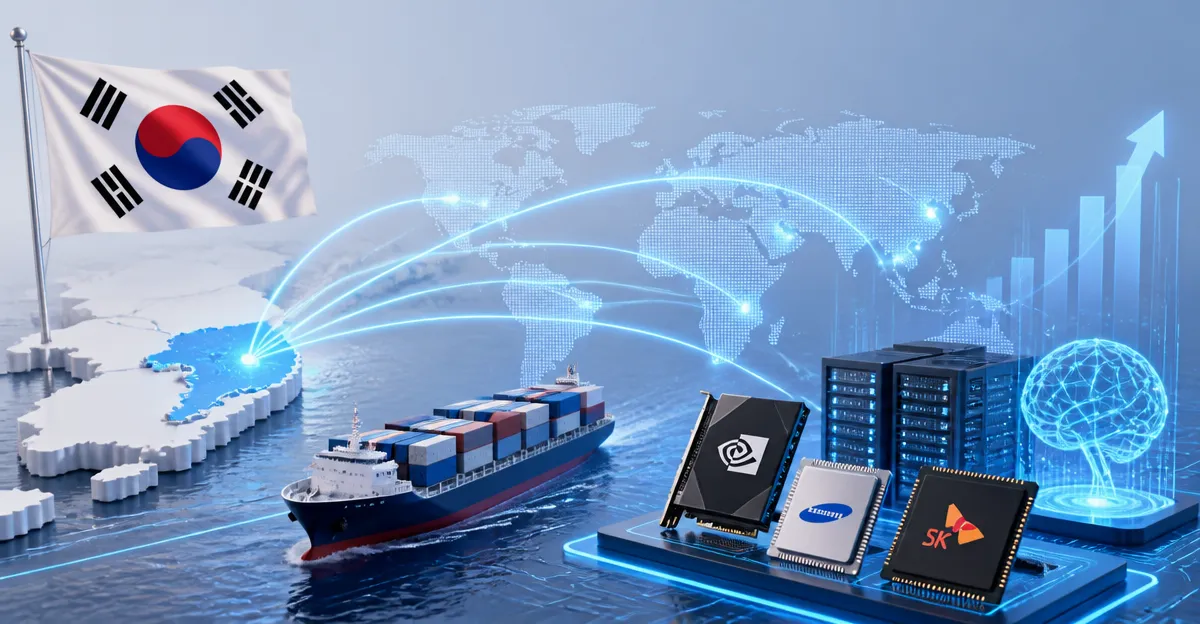
August 1, 2026, (Inside AI) — South Korea’s exports surged 62.8% in July to $98.89 billion, beating economist forecasts and underscoring the relentless global appetite for AI infrastructure. The preliminary trade data, released Saturday by the customs agency, reveals a trade landscape reshaped by semiconductor and computer demand, even as broader market jitters test investor confidence.
The figure handily topped the 59.0% gain predicted in a Reuters poll, and while it marked a deceleration from June’s 70.7% spike, it remains the second-strongest annual growth rate in a streak that began in June 2025. The numbers arrive amid a volatile period for South Korean equities, where the benchmark KOSPI tumbled 22% last month in the steepest selloff since 2008, only to stage a record rally on Friday as global semiconductor stocks surged.
Semiconductor exports, the nation’s economic bellwether, rocketed 179% year-on-year, driven by escalating memory chip prices. The trade ministry noted this occurred despite emerging concerns over Apple’s potential adoption of Chinese memory chips and a new AI development in China. Computer exports posted an even more explosive 404% jump, fueled by massive AI infrastructure investments from major U.S. technology firms. These gains highlight South Korea’s pivotal role in the AI supply chain, a position that has drawn scrutiny in a recent OECD economic survey for South Korea warning about over-reliance on cyclical tech sectors.
The export boom is underpinned by corporate earnings that paint a picture of both triumph and tension. Samsung Electronics reported a more than 250-fold jump in chip profit and announced multi-year supply deals with major data center operators, warning that global chip shortages could intensify and stretch into 2028. A day earlier, SK Hynix posted bumper quarterly results but fell short of lofty investor expectations, stoking concerns about a potential slowdown in AI spending by big tech firms.
By destination, shipments to China soared 96%, while those to the U.S. rose 69%. Exports to the Middle East increased 25%, snapping five consecutive months of declines linked to the Iran war. Imports rose 26.5% to $68.56 billion, roughly in line with forecasts, yielding a monthly trade surplus of $30.32 billion, down from June’s record $36.09 billion.
The data arrives as South Korea navigates a delicate geopolitical and economic tightrope. The nation’s semiconductor dominance has made it a flashpoint in U.S.-China tech rivalry, with Washington pushing for tighter export controls while Beijing seeks to bolster its domestic chip industry. The trade ministry’s acknowledgment of Chinese AI developments and Apple’s memory chip considerations signals that Seoul is closely monitoring shifts that could erode its competitive edge. Meanwhile, the KOSPI’s wild swings reflect a market hypersensitive to any hint of an AI spending pullback, a vulnerability that could test policymakers in the months ahead.