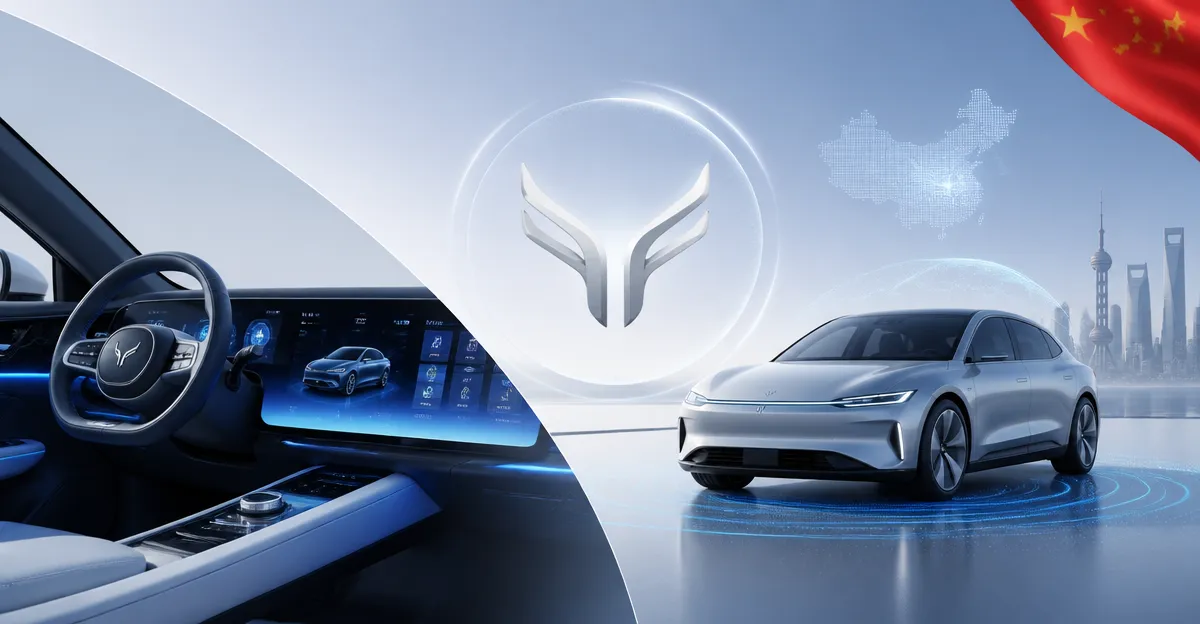
August 19, 2026, (Inside AI) — Banma Intelligence is repositioning itself from a smart cockpit provider to a full-stack AI platform company, betting that the next wave of automotive software will be defined by AI-native vehicles rather than software-defined ones.
The Shanghai-based company, founded in 2015, has shifted from perception-based AI to generative AI and now agentic AI. Its strategy centers on the Yan AI technology brand, launched in 2024, which spans foundation models, on-device models, AI agents, and an AI-native operating system.
Banma Intelligence describes its vision as AI in All, aiming to embed AI into the vehicle’s core decision-making layer rather than layering it on top of existing systems. The company says its solutions are deployed in more than 10 million intelligent vehicles across 69 automakers, adapted to around 10 chip companies and over 30 chip platforms.
The shift matters because automotive competition is moving beyond hardware and basic software. In the software-defined vehicle era, automakers competed on smart cockpits, intelligent driving, and over-the-air updates. Banma Intelligence argues the next phase is AI-Defined Vehicles, where AI is part of the operating system itself, not an application running on it.
Read: Micron Signs Long-Term Chip Deals with Qualcomm, Harman for AI-Powered Cars
On-device omni-models shift cars from command execution to proactive service
Banma Intelligence’s flagship model is AutoOmni, an on-device, omni-modal foundation model that integrates visual, voice, and textual information for continuous perception. The company’s concept of No Touch, No App envisions vehicles that understand users proactively, rather than waiting for explicit commands.
For example, a vehicle could assess driver fatigue and automatically adjust the seat and music, or use the user’s schedule to plan routes and charging stops in advance. This moves the vehicle from executing commands to providing services.
The company is also expanding its agent architecture. Last year it launched SystemAgent, shifting from conversational AI to task execution. This year it introduced AutoClaw, designed to break down complex requests, plan tasks, and call on different agents and tools to complete them.
In a parking lot, a parking assistant agent could use exterior cameras to gather information, while an on-device foundation model handles recognition and decision-making before calling services to complete parking payments. When users leave the vehicle, the system could identify items such as smartphones, laptops, and water bottles and proactively remind them if anything has been left behind.
Banma Intelligence is pursuing a cloud-device collaborative approach. Complex tasks can leverage cloud computing, while tasks requiring real-time responses and stronger privacy protection can be handled primarily on the vehicle. Cars need to process large amounts of real-time information from cameras, microphones, and sensors, while also handling privacy and safety concerns. This makes low latency, offline availability, and data security important requirements for automotive AI.
Read: Chinese AI Models Gain Foothold in Europe Despite Brussels’ Trepidation
Dual-track global strategy targets international and Chinese brands
Banma Intelligence is pursuing a dual-track global strategy called In China for Global and From China to Global. This includes working with international brands such as Volkswagen and BMW, while also supporting Chinese brands including IM, Roewe, MG, and Jetta in overseas markets.
The company says true globalization requires more than replicating products in overseas markets. It also requires localized adaptation, data compliance, cybersecurity, and the development of local service ecosystems.
Banma Intelligence’s evolution mirrors a broader industry trend where Chinese automotive software companies are moving from domestic dominance to global expansion. The company’s work with international automakers signals a potential shift in how Chinese AI technology is perceived in global automotive supply chains.
However, the company faces competition from other Chinese AI cockpit providers and global technology firms investing in automotive AI. The success of its AI-native vehicle vision will depend on whether automakers adopt its full-stack platform or continue to build in-house solutions.
Banma Intelligence’s focus on on-device AI aligns with growing concerns about data privacy and latency in connected vehicles. By processing data locally, the company can offer faster responses and stronger privacy protection, which may appeal to automakers in markets with strict data regulations.
The company’s shift from smart cockpits to AI cockpits reflects a fundamental change in how vehicles interact with users. Instead of waiting for commands, cars are becoming proactive agents that understand context and act on behalf of users. This transformation could redefine the relationship between drivers and their vehicles.