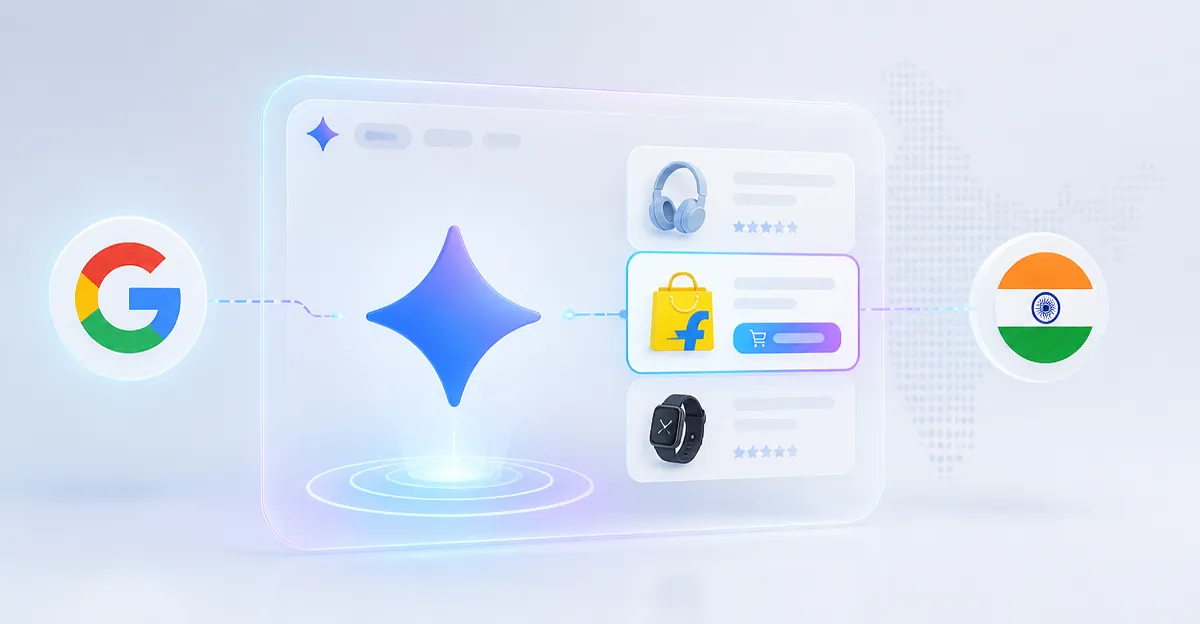
September 27, 2026, (Inside AI) — Google is quietly testing a feature that lets users buy products from Flipkart directly inside Gemini and AI Mode in Google Search, without ever leaving the chat window. The experiment, currently limited to a small catalogue of smartphones, electronics, and mobile accessories, shows a 'Buy' button on select Flipkart listings. Clicking it opens a Flipkart-branded checkout flow embedded in the AI interface itself.
The test is small, but the signal is large. Google is not just helping people find products anymore. It is trying to close the sale. A wider rollout is targeted for October 2026, timed for India's festive shopping season. That timing matters because festive months drive a disproportionate share of the country's annual e-commerce sales.
Why Google Wants Checkout Inside Gemini
For years, Google's shopping strategy has been about discovery. Search results, Shopping ads, and product listings pushed users to merchant sites. Now the company wants to keep them inside its AI surfaces. That shift turns Gemini from an assistant into a storefront, and it puts Google in direct competition with the marketplaces it once served.
The move follows a pattern. Google has already been building native checkout experiences and commerce protocols into its AI products. The Flipkart test is the clearest sign yet that the company wants transactions to happen natively inside Gemini, not on a separate website.
Flipkart, owned by Walmart, is India's largest homegrown e-commerce player and a natural first partner. Its catalogue and logistics network give Google a low-risk way to test payments, returns, and merchant onboarding inside an AI chat.
Google is "always testing new features and experiences to help people discover and connect with businesses more easily," a company spokesperson said. The company regularly runs experiments and has no further details to share.
The spokesperson's comment is deliberately narrow. It confirms the test exists without confirming the scale, the revenue model, or whether Flipkart pays Google a commission. Those details will determine whether this becomes a real business or a demo.
Rivals Race Toward Agentic Commerce
Google is not alone. OpenAI and Meta are both pushing shopping features into their AI platforms. The race is to move AI chatbots from answering shopping queries to completing purchases. AI agents are the accelerant. They can compare prices, fill carts, and check out with minimal human input.
But agentic commerce has a gatekeeper problem. Amazon recently blocked Meta's personal AI agent, Muse, from accessing its shopping site, citing privacy and security risks. That block is a warning. If the largest retailers refuse to let outside agents in, the revenue potential of AI shopping agents shrinks fast.
Google's Flipkart deal sidesteps that problem for now. Flipkart is a willing partner, not a defensive one. But the same question applies. Will other major retailers open their catalogues to Gemini, or will they treat Google as a competitor and shut the door?
Consumer behavior adds another layer. A recent report found that 87% of shoppers find AI-aided shopping faster, yet 88% still choose cash on delivery. Speed of discovery does not automatically translate into digital payment adoption. Google's embedded checkout will have to work with the payment habits Indians actually use.
YouTube is running a parallel play. At its annual Made on YouTube event in New York City last week, the platform announced that its Ask YouTube feature will handle shopping queries, product-comparison tables, and voice commands for TV users. YouTube also expanded its creator-focused Shopping affiliate programme with Amazon in India. AJIO, Meesho, Snapdeal, and Tata CLiQ are set to join as new partners. Creators in India and Brazil will soon tag Amazon products in videos, with localized offers shown to viewers in different markets.
The numbers explain the push. More than 450 million YouTube users in India search for shopping-related content on the platform. Indian shopping-related watch time is up 55% year-over-year. Globally, shopping-related watch time topped 40 billion hours in 2025, and gross merchandise value grew 13 times over two years.
Read: ChatGPT Ads Expands to Southeast Asia and Taiwan, Reaching Over 60 Countries
Those figures show where attention already lives. The open question is whether Google can convert that attention into completed transactions inside an AI chat, or whether users will keep browsing in one place and buying in another. The October rollout will offer the first real answer.