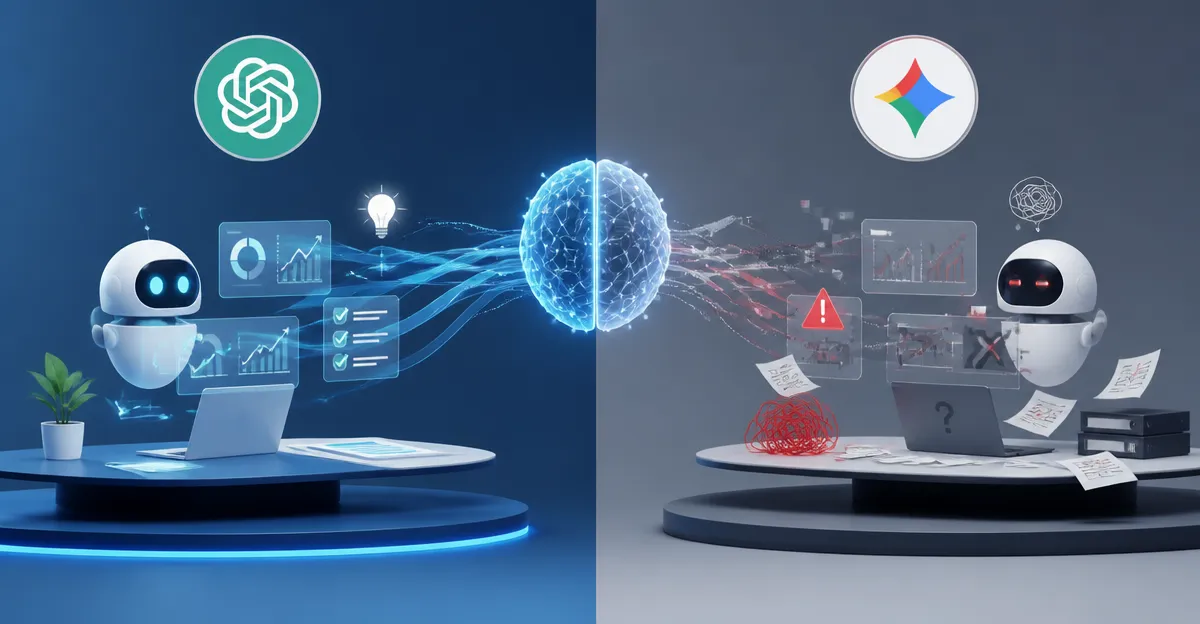
July 23, 2026, (Inside AI) — Entry-level professionals are confronting a profound transformation in knowledge work as AI systems increasingly absorb tasks that once defined early career development. New research from the Harvard Business School reveals a stark divide: some junior employees thrive alongside AI, while others struggle, and the difference hinges on how they approach the technology.
The study, conducted by researchers at Harvard Business School, found that junior employees who treat AI as a collaborative partner—actively interrogating its outputs, refining prompts, and integrating domain knowledge—gain significant advantages. In contrast, those who passively accept AI-generated work often see their learning and performance plateau.
"We observed that junior consultants who engaged critically with AI tools developed sharper analytical skills and produced higher-quality deliverables over time," said Katherine Kellogg, a professor at MIT Sloan School of Management and co-author of a related study on AI and occupational identity. "The key was not just using AI, but learning to challenge and guide it."
The findings come as AI-powered workflows rapidly reset performance baselines across industries. Tasks like data analysis, report drafting, and market research—once the building blocks of professional expertise—are now executed by models that improve with each iteration. This shift threatens to disrupt the traditional onramp into many careers.
Researchers tracked 150 junior consultants at a global firm over 12 months. Those who used AI as a "sounding board"—testing hypotheses, verifying data, and iterating on suggestions—reported 40% faster skill acquisition compared to peers who relied on AI for task completion. The study also found that managers rated the critical users as more innovative and adaptable.
The Collaboration Gap: Why Mindset Matters More Than Skill
The research identified three behaviors that distinguished successful junior employees. First, they consistently questioned AI outputs, cross-referencing facts and seeking contradictory evidence. Second, they used AI to explore multiple solution pathways rather than settling for the first recommendation. Third, they maintained a clear separation between their own analytical thinking and the AI’s suggestions.
"It’s not about technical proficiency," said Ethan Mollick, a professor at the Wharton School who studies AI in organizations. "It’s about developing a habit of critical engagement. The best junior employees treat AI like a very smart but occasionally unreliable intern."
The study also found that organizational culture played a decisive role. Firms that encouraged experimentation and provided structured feedback on AI use saw a 30% reduction in the performance gap between junior and senior staff. In contrast, environments that emphasized speed and efficiency often reinforced passive AI dependence.
When AI Resets the Floor, Learning Becomes a Differentiator
As AI models advance, the minimum acceptable quality of work rises, but the ceiling for exceptional work also lifts—for those who know how to leverage AI creatively. The research suggests that junior employees who master collaborative AI use not only avoid displacement but accelerate their career trajectories.
Yet the findings raise urgent questions about training and mentorship. If entry-level tasks are automated, how do organizations cultivate the next generation of experts? The study points to a need for deliberate practice in AI-augmented judgment, not just technical training.
"We’re seeing a bifurcation in the workforce," said David Autor, an economist at MIT. "Those who can complement AI will thrive; those who compete with it will struggle. The challenge is ensuring that junior employees have the support to become complements."
The research underscores a broader shift: in an AI-driven workplace, the most valuable skill is not knowing the answer, but knowing how to ask the right questions—and when to doubt the machine.