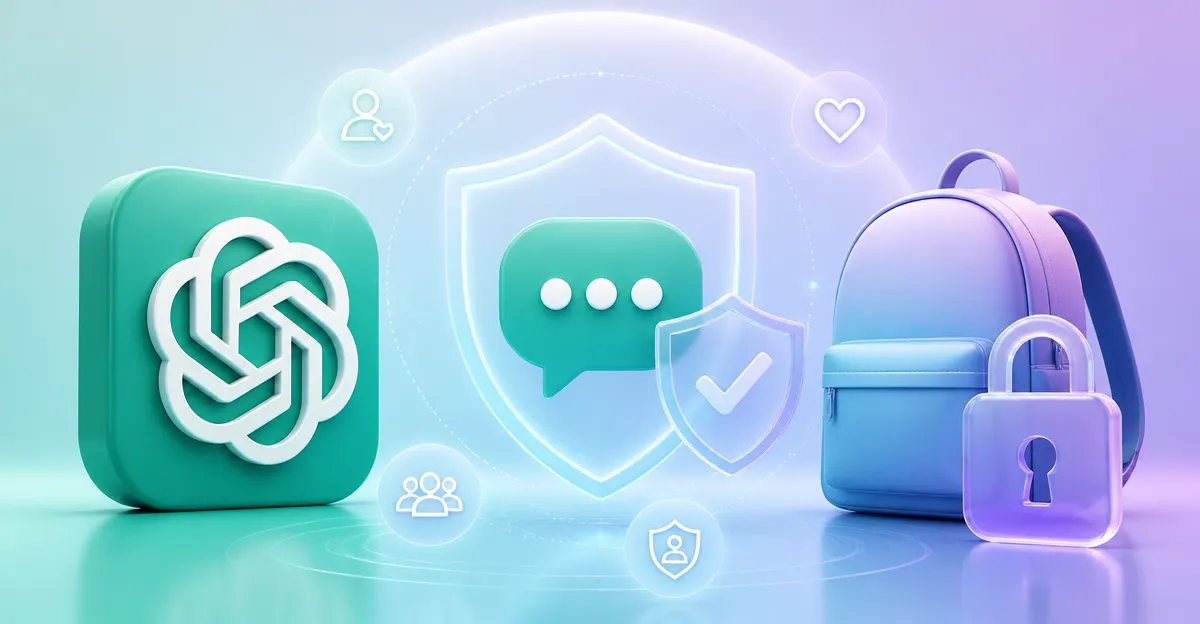
August 18, 2026, (Inside AI) — OpenAI has released a dedicated ChatGPT for Teens, a version of its chatbot built for users aged 13 to 17. The product includes stricter content filters on self-harm, suicide, and sexual conversations, plus tools for homework guidance and optional parental controls.
The launch follows months of warnings from child safety advocates about minors using AI chatbots for companionship and schoolwork. OpenAI says the teen version aims to meet adolescents at their developmental stage without exposing them to harmful material.
Ann O’Leary, vice-president of global policy at OpenAI, framed the design philosophy. “We want to treat teens like teens, which means that we have to make sure that we’re showing up with the right developmental stage when we’re not either talking down to them or treating them like kids, but we’re also making sure that they’re not exposed to material that they shouldn’t be exposed to,” O’Leary said.
Parents who link accounts can set quiet hours and receive alerts in limited high-risk situations, such as possible self-harm. OpenAI is also adding notifications tied to eating disorders, prioritizing moments when offline help matters most.
How the teen model blocks emotional overreliance
OpenAI has engineered the teen chatbot to avoid implying it has feelings, consciousness, or emotional experience. That design choice responds directly to research showing teens can anthropomorphize AI and form unhealthy attachments.
Allison Mishkin, head of child development at OpenAI, explained the process. “We went through and identified what are the hypothetical cues that a model could give that might make a teenager kind of develop a relationship to it,” Mishkin said.
The safeguards arrive as Common Sense Media reported in 2025 that over 70% of U.S. teens use AI chatbots for companionship, with half using AI companions regularly. Sam Altman, OpenAI’s CEO, has called emotional overreliance a “really common thing” among young people.
For schoolwork, the teen version steers students toward solving problems themselves rather than generating essays or direct answers. OpenAI already offers a teacher-focused ChatGPT variant, and this move could expand its footprint in education.
Age checks without hard verification
OpenAI does not verify user ages. Instead, it uses age assurance to estimate whether someone is under 18 based on query patterns. Users identified or self-identifying as minors are automatically shifted into the teen version.
That approach mirrors Meta‘s teen accounts on Instagram, which apply stricter content, chat, and privacy settings by default. Parental controls on ChatGPT for Teens require both the teen and a guardian to opt in, but O’Leary said the product is designed to be safe even without those controls.
The teen chatbot launches into a tense regulatory and cultural moment. Lawmakers in several U.S. states have proposed age-verification laws for AI platforms, and school districts remain divided on AI’s role in classrooms. OpenAI’s move may preempt stricter rules while giving parents a concrete tool to manage use.