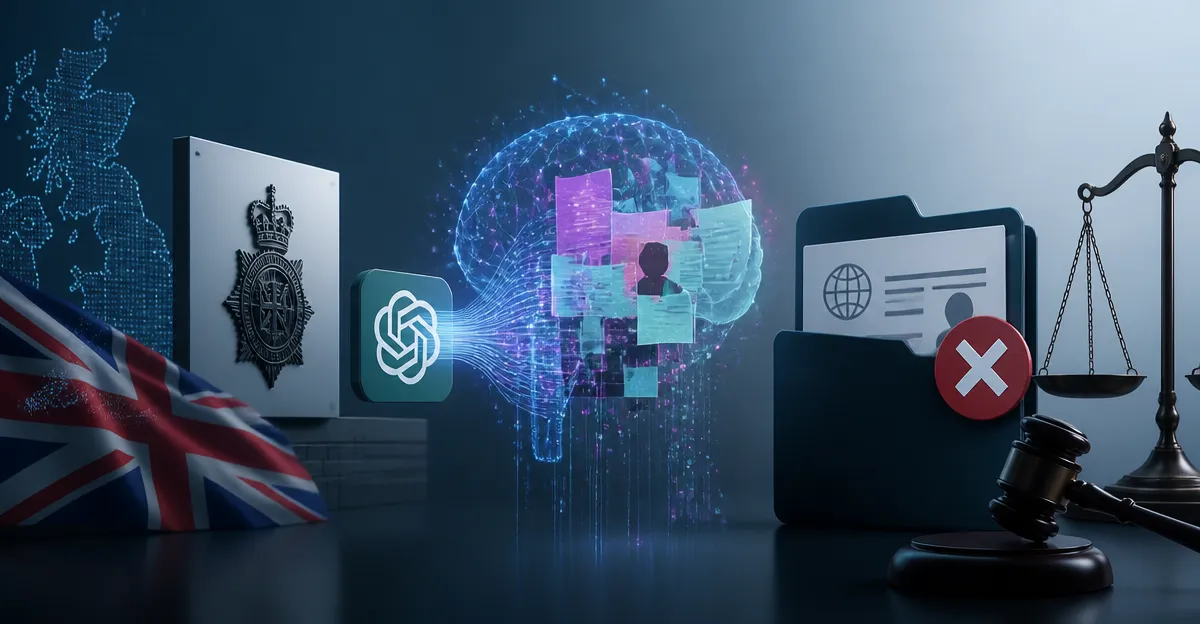
July 28, 2026, (Inside AI) — A senior judge has suggested that the UK Home Office may have used "AI hallucinated" information to refuse an asylum claim, raising alarming questions about the use of artificial intelligence in life-altering government decisions.
The case involves a Moroccan woman and her child who fled forced underage marriage and extreme violence, including rape. She claimed asylum fearing death from her husband, a powerful convicted criminal. The Home Office refused her claim, citing a supposedly authoritative document that judges now believe never existed.
In a decision dated July 14, Upper Tribunal Judge Stephen Smith stated that the missing document, a country policy information note (CPIN) on Morocco supposedly from July 2021, could not be found. The Home Office's own country policy and information team was unable to confirm its existence. The judge noted that the refusal letter "bears hallmarks consistent with the use of artificial intelligence."
"It may therefore transpire that references to country information note Morocco July 2021 in that letter are a result of an AI 'hallucination'. If so that would represent an extremely serious failing on the part of the respondent [Home Office]." Judge Stephen Smith, Upper Tribunal
The judge called reliance on a nonexistent document "analogous to relying on bogus evidence" and deemed it a procedural irregularity. The woman had initially appealed to a lower tribunal, where a judge rejected her case based on the same phantom CPIN. She then took the case to the upper tribunal, which uncovered the discrepancy.
When The Guardian pressed the Home Office for the document, officials first sent a broken link, then produced an internal country information note (CIN) instead of the cited CPIN. No CPIN on Morocco has been published since 2017. That internal CIN, never disclosed to the court, does not conclude Morocco is safe for women like the appellant. It notes that 40,000 child marriages were exempted in 2018, and that marital rape is not explicitly criminalized.
The incident highlights the risks of deploying large language models in bureaucratic settings without verification. AI hallucinations, where models generate plausible but false information, are a well-documented problem. Research from Stanford University's Human-Centered AI group shows that such errors can persist even in advanced systems, especially when models are asked to cite sources.
The Home Office has not confirmed whether it uses AI to draft asylum decision letters. A spokesperson said: "The home secretary is restoring order and control to our asylum system by removing incentives drawing illegal migrants to the UK and ramping up removals of those with no right to be on British soil. We keep our asylum system under constant review. Claims are always considered on their individual merits and based on the latest evidence to ensure only those in genuine need are granted UK protection."
This case echoes broader concerns about algorithmic decision-making in immigration. A UK government transparency standard requires public bodies to disclose when algorithms are used in significant decisions, but enforcement remains patchy. Legal experts warn that without rigorous auditing, AI errors could systematically undermine due process.
Ghost Citations Undermine Legal Fairness
The judge's ruling underscores a fundamental threat to legal integrity. If government bodies rely on AI-generated documents that cannot be verified, asylum seekers may be denied protection based on fiction. The Home Office's shifting explanations, from a missing CPIN to an unpublished CIN, suggest either a cover-up or a deeply flawed document management system.
The internal CIN's content actually supports the woman's case: it details widespread child marriage and legal gaps around sexual violence. Yet it was never presented to the court. This selective use of evidence, combined with a phantom citation, raises questions about whether the Home Office's AI tools are being used to justify predetermined outcomes.
Automation Without Accountability
The Home Office has a history of controversial technology deployments, from the Windrush scandal's data mismanagement to flawed visa algorithms. In 2020, a court found its streaming tool for asylum seekers unlawful. The current case suggests that AI integration is outpacing safeguards, with officials possibly unaware of what their systems generate.
For the Moroccan woman, the upper tribunal's finding of procedural irregularity means her case will be re-examined. But the broader implications are stark: if a government department can present nonexistent evidence as fact, and only a painstaking appeal exposes the error, how many other decisions rest on digital mirages? The Home Office must now explain how a ghost document entered its legal process, and what steps it will take to prevent AI hallucinations from shaping who is deemed worthy of protection.