July 29, 2026, (Inside AI) — Meta CEO Mark Zuckerberg has sharply criticized the centralized approach to artificial intelligence development favored by leading labs, warning it could stifle innovation and narrow public access to the technology. In an interview with The New York Times published Monday, July 28, Zuckerberg argued that tightly controlling AI models represents a betrayal of core values in American tech.
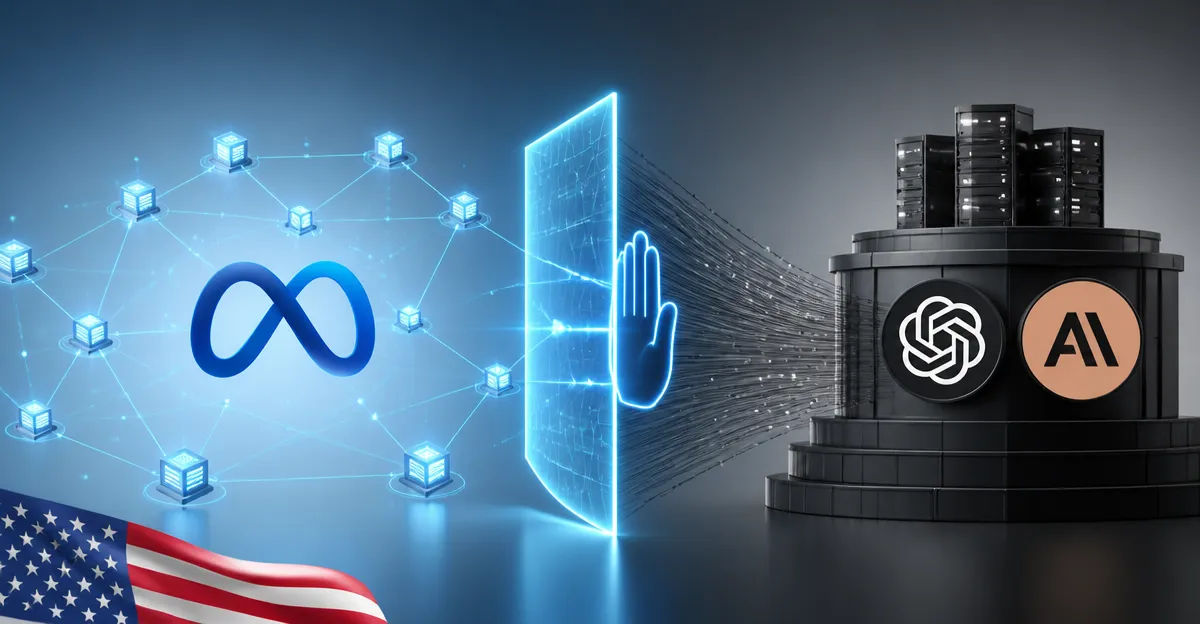
Zuckerberg did not name OpenAI or Anthropic directly, but his remarks target their philosophy of restricting model access due to safety concerns. He framed the debate as a choice between empowering individuals and concentrating power in a few hands.
"So much of the discourse from a lot of the other labs that are developing this is overwhelmingly filled with doom. There needs to be a voice or several voices that are bringing realism to this debate," Zuckerberg said.
His comments come amid a widening rift in Silicon Valley over AI governance, with companies like Anthropic advocating for tight controls on frontier models while Meta, Google, and Nvidia push for open development. The split was underscored last week when Nvidia CEO Jensen Huang circulated a letter urging U.S. policymakers to avoid "premature restrictions" on open-weight AI models. The letter has been signed by over two dozen firms, including Meta, Microsoft, Google, and SpaceX, but notably not by Anthropic.
Zuckerberg also published an opinion piece in the Wall Street Journal, reiterating his belief in "individual empowerment, invention and balance of power" over centralized AI. He challenged the notion that a single, aligned superintelligence could serve all of humanity.
"I think it is literally impossible to have a single benevolent superintelligence that is simultaneously aligned with everyone at once," he said.
Instead, Zuckerberg envisions "personalised superintelligence" where AI tools adapt to individual users' values and needs. This vision aligns with Meta's long-term strategy, though the company's own approach has oscillated. After initially championing open-weight models like Llama, Meta shifted course last year by investing $14.3 billion in ScaleAI and hiring founder Alexandr Wang to lead a revamped AI division, now called Meta Superintelligence Labs (MSL). MSL's first in-house model, Muse Spark, was released as closed, not open. Meta has since stated it will continue developing open-weight models alongside proprietary ones.
The debate over centralization taps into deeper tensions about AI safety and accessibility. Anthropic CEO Dario Amodei has argued that today's leading models are too dangerous to share without strict controls, a stance that contrasts with the open-weights movement backed by Nvidia and others. Research from institutions like Stanford's Center for Research on Foundation Models has examined the trade-offs between open and closed AI systems, highlighting both the innovation benefits and potential misuse risks.
Zuckerberg's Bet on Decentralized AI
Zuckerberg's critique extends beyond safety rhetoric to a fundamental disagreement about how AI should be governed. He sees the push for centralized control as a threat to the open ecosystem that historically drove tech progress. "I believe the general arc of the industry has been toward more openness and putting the power of tech into more people's hands, not fewer," he said.
His stance puts Meta at odds with Anthropic, which has positioned itself as a safety-focused lab. Anthropic's refusal to sign the Nvidia letter highlights its commitment to caution, even as it supports some forms of open-weight AI. The letter's signatories argue that broad restrictions could hamper U.S. competitiveness, particularly against China.
Zuckerberg acknowledged the diversity of views in the industry, saying, "I don't know if the goal is to have everyone agree on everything. Almost by definition, if you believe what I do, you don't need to convince everyone of everything."
As the AI landscape evolves, the tension between open and closed development will likely shape regulatory battles and market dynamics. Meta's dual strategy—investing in both proprietary and open models—reflects a bet that the future of AI lies in pluralism, not monopoly.