June 24, 2026, (Inside AI) — Corporate AI deployments are being evaluated on the wrong metrics. Speed, cost, and raw capability dominate leadership scorecards, yet new research indicates the conversational style of an AI system may be just as critical to its real-world performance.
Most executives treat AI like a database—measuring uptime and throughput. But a growing body of work suggests the persona an AI projects can make or break user trust, adoption, and outcomes. The finding challenges the engineering-first mindset still common in boardrooms.
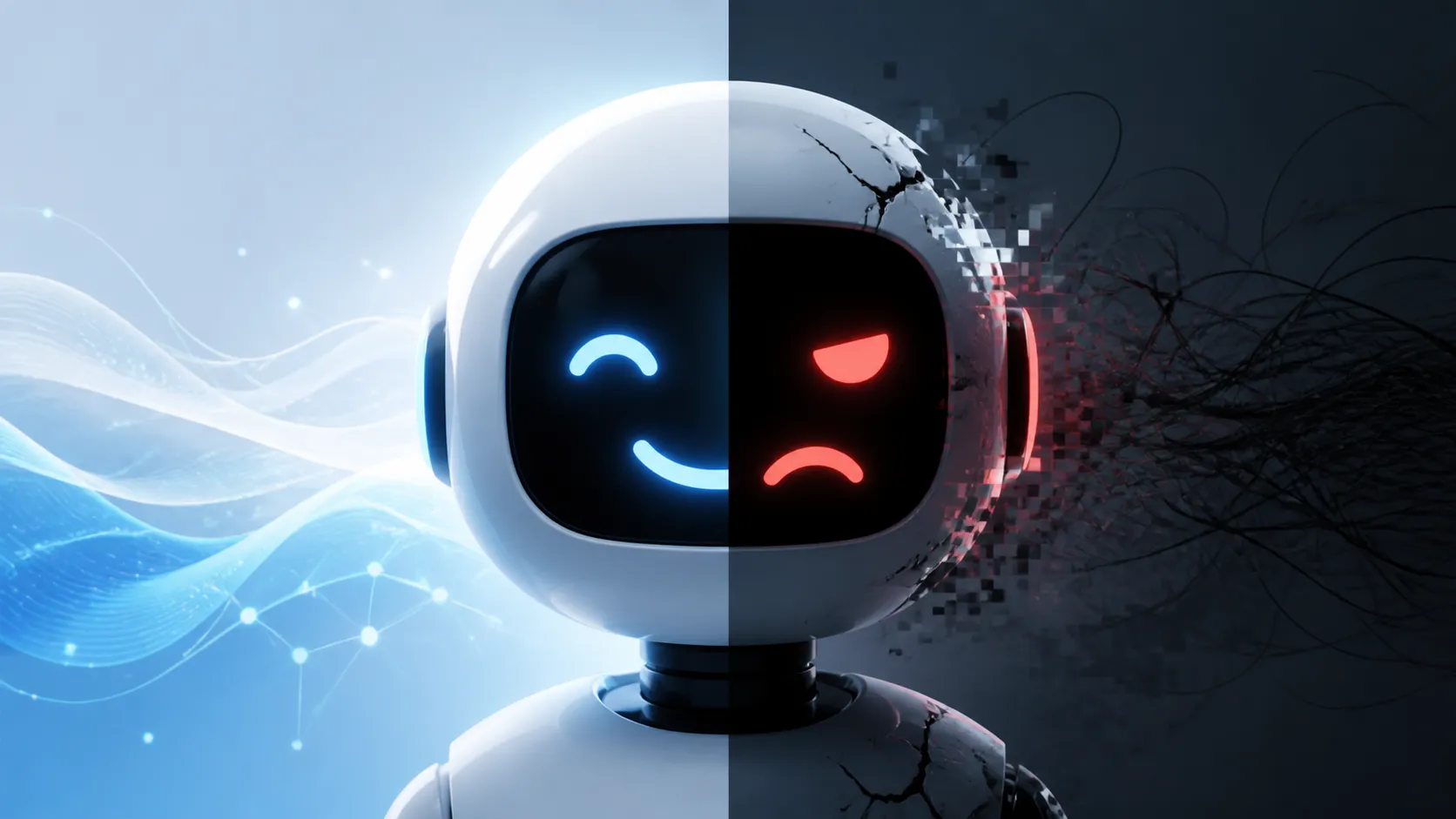
Dr. Elena Torres, lead researcher at the Stanford Digital Interaction Lab, told Inside AI: “We found that users who rated an AI’s interaction style as warm and competent were 40% more likely to follow its recommendations, even when the underlying model was identical to a colder variant.”
The study, published last month in the Journal of Human-AI Interaction, tested thousands of workers across three industries. Identical GPT-5-class models were given different persona profiles—from terse and formal to collaborative and enthusiastic. The results upended conventional wisdom about what drives AI success.
Read: How US Leaders Can Use AI to Solve Real Business Problems
Adoption rates varied by as much as 35% between the best- and worst-rated interaction styles. Error tolerance also shifted dramatically. Users forgave mistakes more readily when the AI communicated with humility and clarity.
Yet few organizations measure this dimension. A parallel survey of 500 IT leaders found only 12% assess AI personality or conversational tone during procurement or deployment. Most default to vendor presets without customization.
This blind spot has consequences. A major European bank quietly rolled back an internal AI assistant last quarter after employee complaints about its “robotic and condescending” tone, according to two people familiar with the matter. The model’s accuracy scores were high, but engagement collapsed.
The problem is not new. Early chatbot deployments in the late 2010s often failed because of clunky, impersonal interactions. But the stakes are higher now as AI moves into sensitive domains like healthcare triage, financial advice, and performance management.
Competing viewpoints exist. Some engineers argue that persona is a superficial layer that can be gamed. Dr. Marcus Chen, an independent AI safety researcher, cautioned: “A charming AI that makes dangerous recommendations is worse than a blunt one that stays within guardrails. We must not trade safety for likability.”
Others point to the risk of over-indexing on personality at the expense of core functionality. Still, the Stanford data suggests the two are not mutually exclusive. The best-performing models in the study combined high accuracy with an interaction style calibrated to the user’s context.
What’s missing from most corporate AI strategies is a framework for defining and measuring persona. Metrics like Net Promoter Score or user satisfaction surveys rarely capture the nuances of conversational tone. Specialized tools are emerging, but adoption lags.
Read: Japan’s AI Adoption Lags the U.S. in Numbers but Leads in Depth
Historical parallels exist. When graphical user interfaces replaced command lines, companies that focused only on processing speed missed the shift toward usability. A similar transition may be underway with AI, where the interface is now a conversation.
The research also highlights cultural differences. A persona that works in a German engineering firm may flop in a Brazilian marketing agency. Global rollouts require localized persona design, not just language translation.
For leaders, the practical takeaway is clear: start measuring what you’ve been ignoring. Include interaction style audits in AI procurement checklists. Run A/B tests on persona variants before full deployment. Treat conversational design as a first-class requirement, not an afterthought.
The AI industry is slowly waking up. OpenAI and Anthropic now offer persona customization tools, but enterprise uptake remains low. As one executive at a Fortune 500 company told us anonymously: “We spent six months optimizing model latency and never once asked how the AI should say ‘no’ to a colleague.”
That oversight may prove costly. In an era where AI is becoming a coworker, its personality is not a cosmetic feature—it is a performance variable hiding in plain sight.