June 25, 2026, (Inside AI) — The fragile calm in U.S.-China relations masks structural dangers, particularly in artificial intelligence and rare earth supply chains, a leading Chinese scholar warned at the World Economic Forum’s annual meeting in Dalian on Thursday.
Zhao Hai, director of the international politics programme at the Chinese Academy of Social Sciences’ National Institute for Global Strategy, struck a cautious tone, stating the current stability is built on a precarious floor.
“I’m not that rosy about the future because the structural forces are still working,” Zhao said.
His remarks come a month after U.S. President Donald Trump’s high-stakes visit to China, which yielded few economic deliverables but saw both sides agree to build what Washington called a “constructive relationship of strategic stability.”
That meeting temporarily eased supply chain pressures, including aircraft engine deliveries. Yet Zhao argued it failed to resolve the deeper mismatch in how both nations perceive the relationship.
While the Trump administration tends to frame ties in transactional terms, Zhao noted that Chinese President Xi Jinping approaches talks through a broader global, bilateral, and people-to-people lens.
“At this stage, it’s no longer a pure bilateral relationship. It’s a global relationship,” Zhao said at the Dalian meeting, also known as “Summer Davos.”
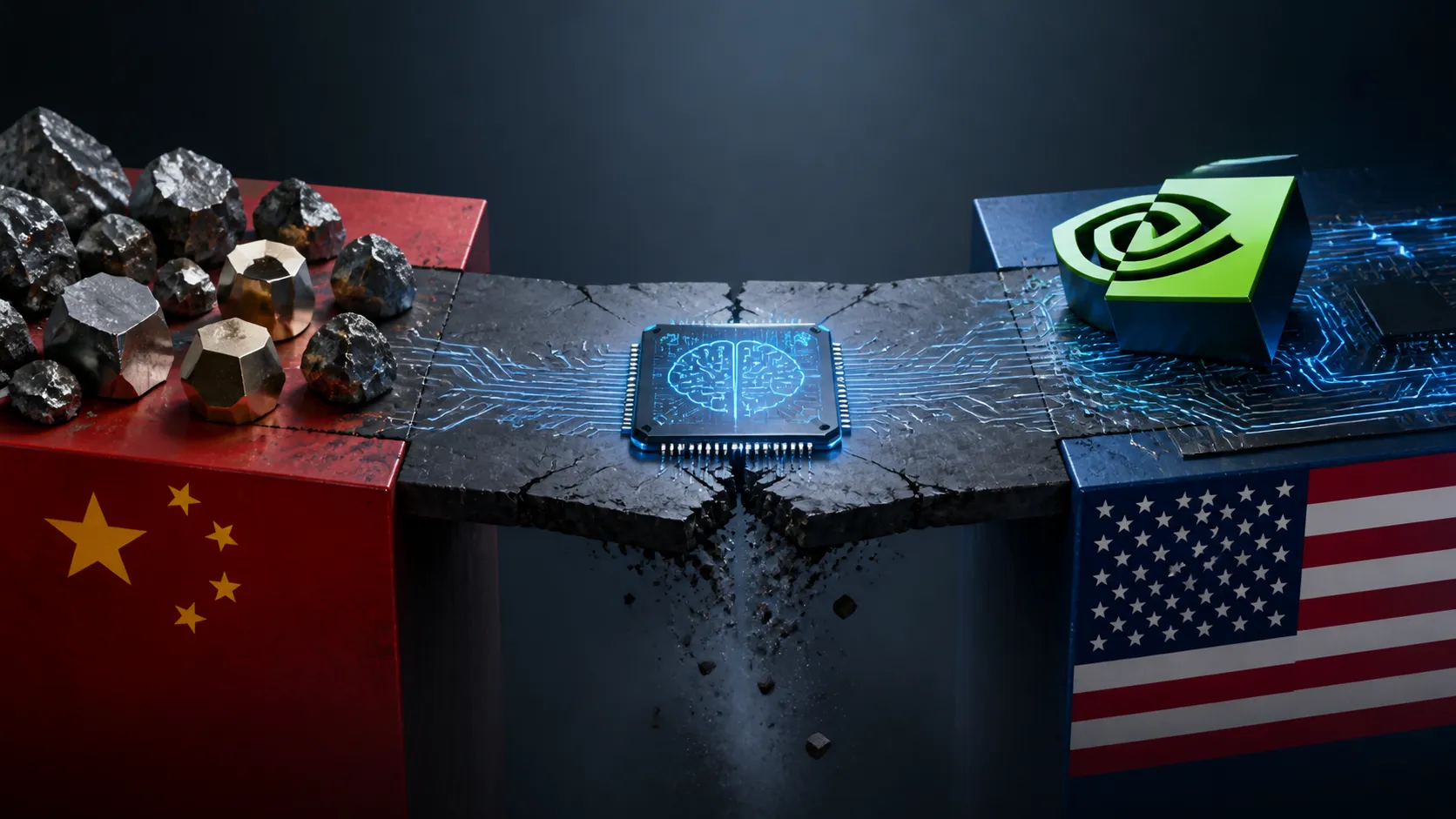
The scholar’s warning highlights two critical fault lines: artificial intelligence and rare earth minerals. Both are arenas where interdependence and competition collide, threatening to destabilize the relationship.
AI’s Dual-Use Dilemma and Rare Earth Dominance
In AI, the U.S. leads in foundational research and chip design, while China excels in data access and application. Export controls on advanced semiconductors have slowed but not halted China’s progress, fueling a parallel AI ecosystem.
China’s dominance in rare earth processing—controlling over 60% of global mining and 85% of refining—gives it leverage. These minerals are essential for everything from smartphones to F-35 fighter jets.
Any disruption in rare earth trade would cripple U.S. defense and tech sectors. Conversely, U.S. chip restrictions threaten China’s AI ambitions. This mutual vulnerability creates a “fragile floor” that could crack under political pressure.
Industry analysts note that while both nations have diversified supply chains since the 2010 rare earth embargo scare, true decoupling remains impossible. The AI supply chain is similarly entangled, with U.S. firms reliant on Chinese data centers and Chinese firms reliant on U.S. tools.
Competing Views on Strategic Stability
Zhao’s skepticism aligns with a growing chorus of experts who see the “strategic stability” framework as a temporary patch. The fundamental clash between U.S. primacy and China’s rise persists, with technology as the central battleground.
Some Western analysts argue that China’s state-driven AI model and rare earth policies are inherently destabilizing. Others counter that U.S. export controls are counterproductive, accelerating China’s self-sufficiency.
What’s missing from the conversation, according to Zhao, is a global perspective. He emphasized that the U.S.-China relationship now shapes everything from climate tech to global AI governance standards.
Looking ahead, the next stress test may come from AI regulation. As both nations develop autonomous weapons and surveillance tools, the lack of a bilateral AI arms control agreement looms large.
At Summer Davos, the undercurrent was clear: the floor is holding, but the structural forces beneath it are stronger than ever.