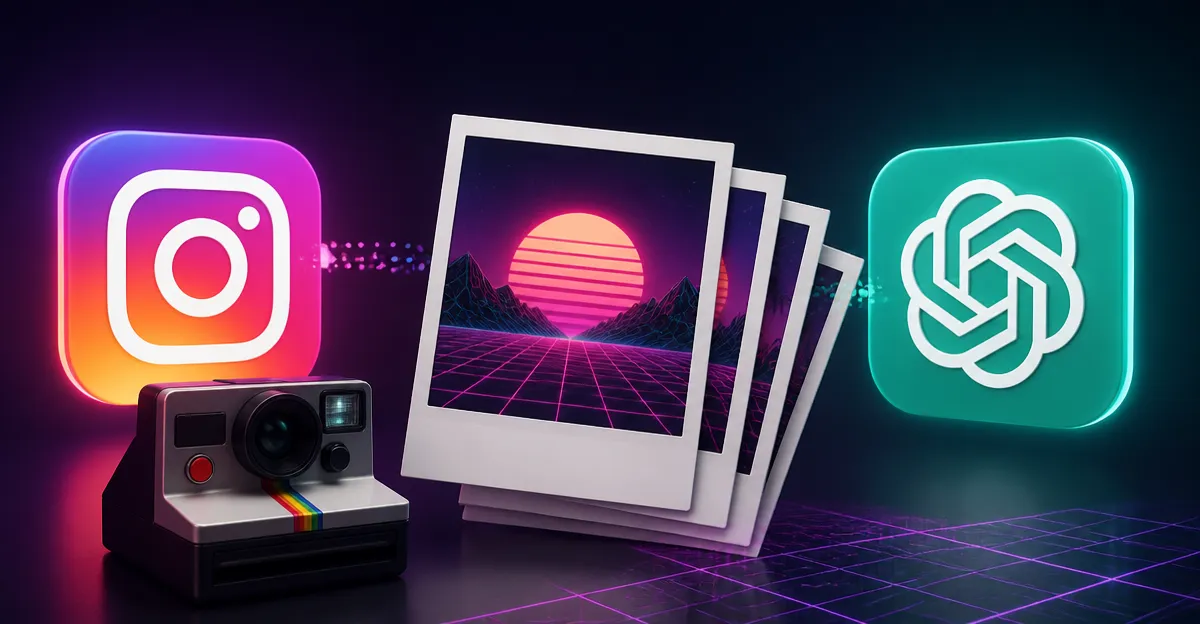
September 9, 2026, (Inside AI) — Instagram feeds have transformed into a time capsule this week, flooded with AI-generated portraits that look straight out of 1986. The trend, driven almost entirely by ChatGPT, has users uploading selfies and receiving retro recreations featuring big hair, disco lighting, and grainy film stock.
The viral format relies on a simple premise: users upload a current photo and ask the AI to recreate it in an ’80s style. The model preserves facial features and skin tone while overhauling hair, clothing, setting, and lighting. Instagram’s “Add Yours” sticker has accelerated the trend’s spread across Stories and Reels.
The trend’s popularity is not uniform globally. In South Asia, a distinct regional flavor has emerged, with many shared results leaning heavily into Bollywood styling. This local adaptation has given the trend more staying power in Pakistan and India, where users are recreating classic film aesthetics rather than generic Western retro looks.
The format has also migrated beyond Instagram to TikTok. Users are not limited to ChatGPT; Google’s Gemini produces similar results. However, ChatGPT remains the dominant tool, with specific prompts circulating widely to achieve particular looks.
Three prompt styles have become especially popular. A Bollywood studio portrait prompt adds voluminous curled hair and jewelry. A family album prompt creates candid, faded snapshot vibes. A third option recreates the classic disco-era party portrait. All prompts stress keeping facial features and skin tone intact.
For those wanting to try the trend, the process is straightforward. Open ChatGPT, start a new conversation, and upload a photo using the + button. Then describe the desired ’80s vibe, including clothing, hairstyles, setting, and lighting. Users should explicitly ask ChatGPT to preserve recognizable features and natural skin tone. If the first draft misses the mark, tweaking the prompt often fixes it.
A widely shared prompt reads: “Imagine this picture as a realistic portrait from an ’80s movie. While preserving the image’s photorealism and natural appearance, use the identifiable facial features, natural skin tone, period-appropriate voluminous hair, colored clothing, statement jewelry, warm studio lighting, subtle analogue film grain, and slightly faded colors to make it appear like a real photograph taken in the 1980s, rather than a contemporary image with a vintage filter.”
Other popular prompts include the Classic ’80s Studio Glamour Shot, the ’80s Yearbook Portrait, and the ’80s Neon Synthwave Portrait. Each provides detailed instructions for hair, lighting, backdrop, and film grain to achieve authentic retro results.
Privacy Risks Lurk Behind Viral Filters
Experts urge caution when uploading personal images to AI platforms. Users should avoid pictures containing sensitive documents or private surroundings. Transforming images of non-consenting people also raises ethical concerns.
Google has implemented safeguards for Gemini images. The company adds a visible watermark and embeds a hidden SynthID marker to flag AI-generated content. ChatGPT does not currently apply similar visible watermarks to user-generated images, leaving provenance less clear.
The trend reflects AI’s growing role in everyday creativity. For South Asian users especially, the Bollywood angle resonates strongly. That appeal should be balanced with genuine privacy awareness, particularly as personal photos become training data for future models.