June 19, 2026, (Inside AI) — Amazon SageMaker AI now offers a new observability capability for inference endpoints, giving customers deep visibility into production generative AI workloads. The feature tracks token performance, GPU health, inference component placement, and autoscaling behavior in real time.
Real-Time Metrics Unify Performance and Infrastructure Health
The capability surfaces metrics like Time to First Token, inter-token latency, queue depth, and tokens per second. It correlates them with infrastructure data such as GPU saturation and KV cache exhaustion. This eliminates manual searches through CloudWatch logs.
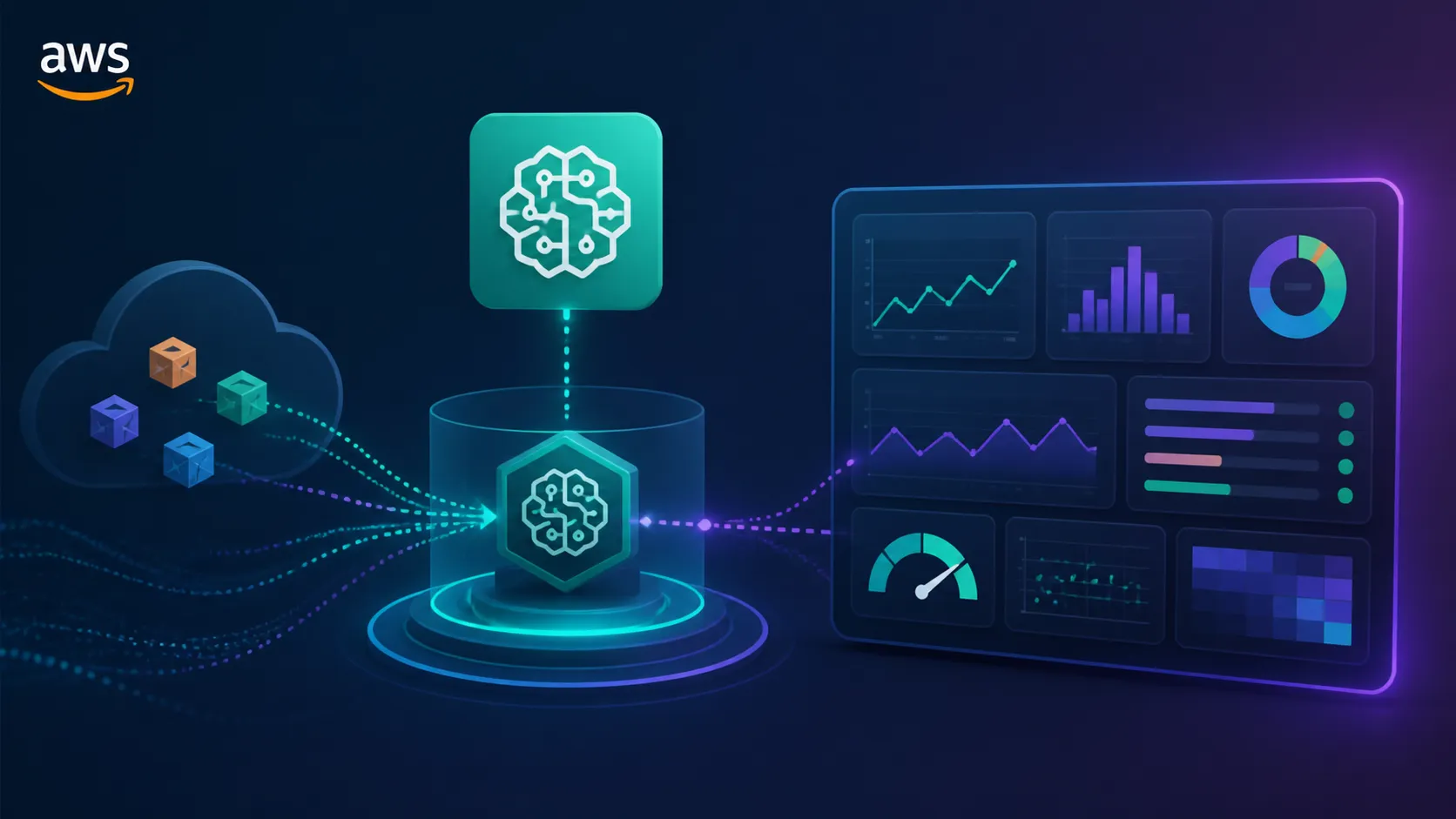
Customers can now diagnose latency spikes and slow scaling operations in minutes. The system automatically publishes OpenTelemetry native metrics without any instrumentation. A pre-built SageMaker AI Insights dashboard in CloudWatch consolidates all data into a single view.
Pre-Built Dashboards and Grafana Integration Streamline Operations
The dashboard shows token latency, GPU utilization, inference component copy counts, scaling events, and cold start breakdowns. Teams can quickly verify availability zone compliance and tune autoscaling policies. For those using Grafana, a regional PromQL endpoint connects directly.
A pre-configured dashboard template is available for import. This lets customers self-serve operational issues and maximize AI investment performance. It reduces diagnosis time from hours to minutes, improving fleet efficiency.
Broad Regional Availability Supports Global Deployments
The observability feature is live in 17 AWS Regions. These include US East (N. Virginia), US East (Ohio), US West (Oregon), and US West (N. California). It also covers Canada (Central), South America (São Paulo), and several European locations.
Asia Pacific regions like Mumbai, Singapore, Sydney, Tokyo, Seoul, and Jakarta are included. European regions span Ireland, Frankfurt, London, Stockholm, and Zurich. This wide reach ensures consistent monitoring across global inference fleets.
Industry Context: Observability as a Competitive Moat
Observability has become critical for production AI. Competitors like Google Cloud’s Vertex AI and Azure Machine Learning offer similar monitoring. However, SageMaker’s deep integration with CloudWatch and OpenTelemetry may reduce tool sprawl.
Some analysts note that native observability can lock customers into AWS. Yet, the PromQL endpoint and Grafana support mitigate vendor lock-in concerns. This balance could appeal to enterprises with multi-cloud strategies.
What’s Under the Hood: Technical Details and Limits
The system uses OpenTelemetry to collect metrics without code changes. It tracks inference component placement across availability zones. Cold start breakdowns help optimize scaling policies for spiky workloads.
However, the feature currently lacks native alerting on custom thresholds. Users must set up CloudWatch alarms separately. Documentation suggests future updates may include anomaly detection and cost attribution.
Forward Look: The Road to Autonomous Inference Operations
Amazon hints at AI-driven recommendations for autoscaling. This could evolve into self-healing inference fleets. For now, the observability capability is a foundational step toward autonomous operations.
To learn more, visit the Documentation and Amazon SageMaker AI webpage.

Sofia spent years studying how machines parse human language before pivoting to cover the systems now rewriting it. She reads technical papers the way others read news and looking for what the numbers are actually saying beneath the headlines.