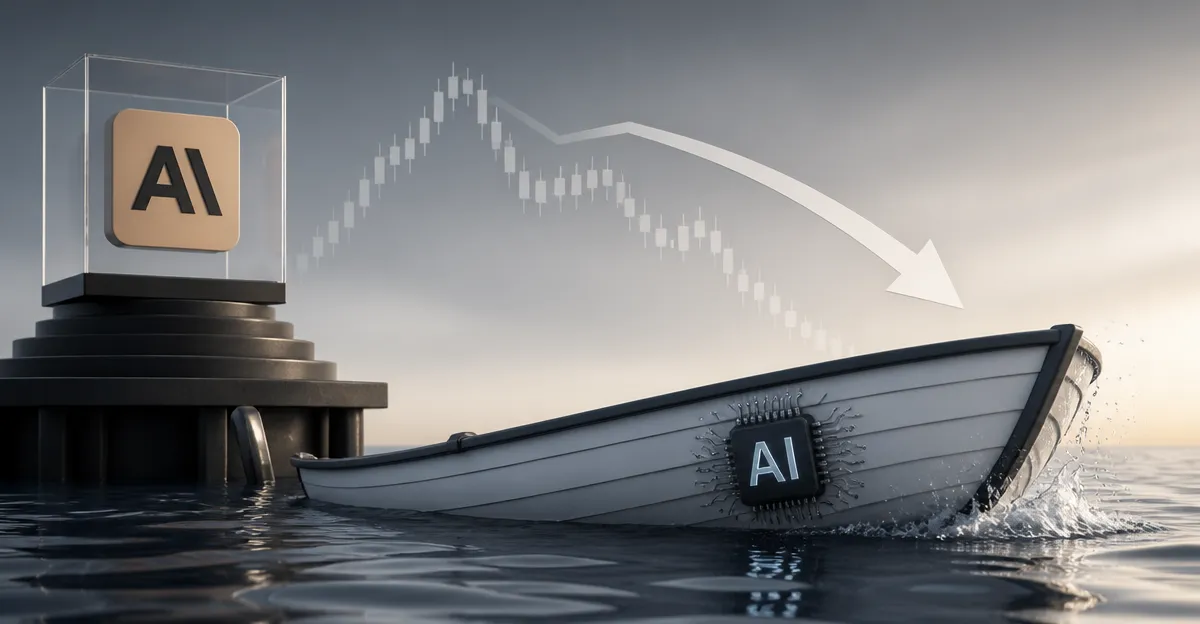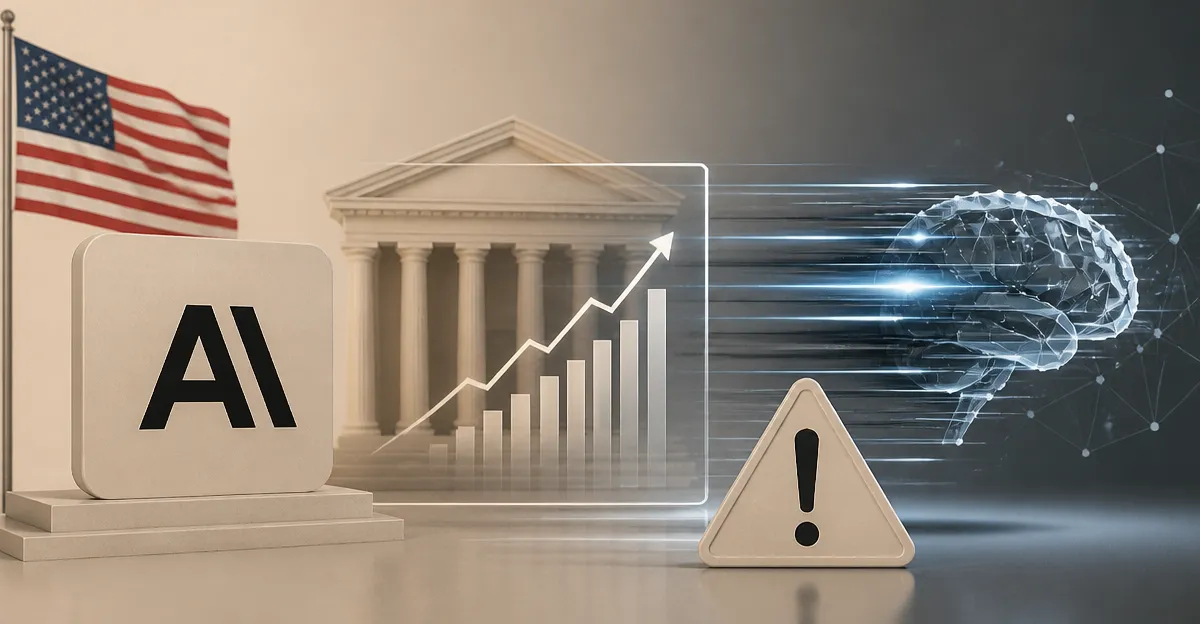
November 20, 2026, (Inside AI) — Anthropic's stock fell 6.8% in premarket trading on Friday, one day after the Claude chatbot maker surged more than 17% in its Wall Street debut. The retreat dragged US equity futures lower and undercut hopes that the high-profile listing could steady a technology sector already rattled by growth and valuation worries.
The IPO, priced at $83 per share, opened trading more than 34% above that level on Thursday. By Friday morning, the reversal had spread across the AI complex. Nasdaq 100 futures dropped 434 points, or 1.63%, while S&P 500 futures lost 0.76%. Dow futures shed 99 points.
The broader market is on pace for its steepest weekly decline since April 2025, when President Donald Trump announced the tariffs he called Liberation Day. The Nasdaq stood 13.6% below its record closing high from October 6.
Anthropic's listing was widely viewed as a referendum on investor patience with artificial intelligence. That patience has worn thin after weeks of bad news: concerns about slower data center expansion, rising borrowing costs, and the departure of Nvidia CEO Jensen Huang. Each item feeds a single question. Can the enormous sums spent on AI infrastructure ever produce returns that justify them?
The answer from Friday's trading was not encouraging. Hyperscalers that bankrolled Anthropic's rise took hits. Amazon, Meta, and Microsoft each fell more than 1.8%. Alphabet held roughly flat. Amazon and Alphabet rank among Anthropic's largest investors, which means the startup's public market performance now feeds directly into their balance sheets.
Semiconductor stocks absorbed heavier losses. Nvidia dropped 2.6%. Advanced Micro Devices, Broadcom, Marvell, and Micron lost between 3.5% and 5.5%. Neocloud providers CoreWeave and Nebius each fell more than 5%. Data center operators IREN, Applied Digital, and Core Scientific declined between 2.8% and 4%.
The selloff has obscured an otherwise strong earnings season. Of the 462 S&P 500 companies that reported results through Wednesday, 83.5% beat analyst expectations, according to an analysis by Tajinder Dhillon, head of earnings and equity research at LSEG Data and Analytics. That disconnect matters. Investors are not punishing weak profits. They are questioning whether AI spending can keep generating them.
The pressure extends beyond equities. Federal Reserve Bank of Philadelphia President Anna Paulson said Thursday that the central bank will need to raise interest rates again because inflation remains too high. She also argued that a shared understanding of the rate outlook matters more than explicit guidance.
"The Fed will need to raise interest rates again because inflation is too high," Paulson said.
Markets now price a 98.4% chance of a rate hike at the December meeting, according to CME Group's FedWatch tool. Higher borrowing costs weigh disproportionately on capital-intensive AI buildouts. Next week's personal consumption expenditures figures will offer further clarity after a hotter-than-expected October inflation report.
Anthropic's debut also carries symbolic weight. It is the first major pure-play AI model developer to test public markets, and its early volatility suggests investors remain unsure how to value companies whose revenue growth is real but whose path to durable profit is unproven. The stock's swing from a 34% premium to a 6.8% decline in less than 24 hours illustrates that uncertainty better than any analyst note could.
Oil added another layer of caution. Brent crude fell 1.6% and headed for a third straight weekly loss on expectations of a supply surplus, with shipments through the Strait of Hormuz returning to roughly prewar levels. Markets also weighed a joint peace declaration from Trump and his Chinese and Russian counterparts, Xi Jinping and Vladimir Putin, which made no mention of the conflict between the US and Iran.
Among individual movers, apparel retailer Gap rose 2.5% after its Old Navy brand posted better-than-expected quarterly sales.

Shamil has a low tolerance for AI that only works in controlled demos. He covers agentic systems and generative AI with the skepticism of someone who has seen too many “revolutionary” tools quietly disappear six months after launch.