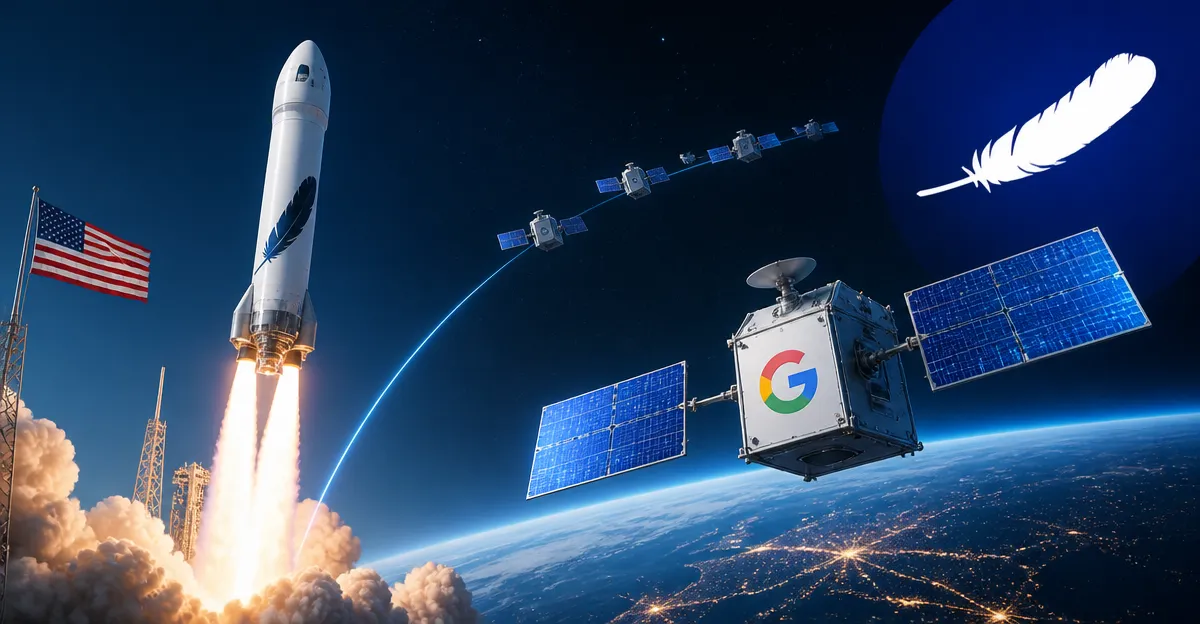
November 20, 2026, (Inside AI) — Google has signed a launch services agreement with Blue Origin to send experimental AI satellites into orbit under a program called Project Suncatcher. The first launch is scheduled for the first quarter of 2029, using Blue Origin's New Glenn rocket. The satellites will carry Google's custom tensor processing units (TPUs) and rely on near-constant solar power to run AI workloads in space, an effort to reduce pressure on Earth's energy grids and land-based data centers.
The deal, announced this week, marks the most concrete step yet by a major cloud provider to test orbital computing as a viable alternative to terrestrial infrastructure. Google hopes the experiment will show whether space-based AI chips can operate reliably and at scale, potentially opening a new frontier for data processing. Blue Origin will deliver the satellites to a sun-synchronous orbit, where they will remain exposed to sunlight almost continuously.
Each satellite will have roughly the computing power of a single rack in a ground-based data center, according to Google. The company did not disclose how many satellites it plans to launch or the financial terms of the agreement. The project builds on Google's existing partnerships with other satellite and launch providers, but this is the first dedicated launch contract for Suncatcher.
Why Google Is Betting on Orbital Compute
Data centers consumed an estimated 460 terawatt-hours of electricity globally in 2022, according to the International Energy Agency, and that figure is rising fast with the AI boom. Google has faced public opposition to its terrestrial data centers over water use, land consumption, and strain on local power grids. Orbiting AI satellites could sidestep those issues by tapping uninterrupted solar energy and avoiding land-use conflicts.
Read: Microsoft Says Tech Firms Must 'Prove' AI Data Centers Benefit Locals
However, space-based computing faces steep hurdles. Satellites require robust radiation shielding, thermal management, and costly maintenance. The latency of transmitting data to and from orbit also limits real-time applications. Google's own blog post acknowledged that the project is experimental and that many technical challenges remain.
"This dedicated launch builds on our ongoing work with other satellite and launch partners and represents a crucial milestone on our long-term roadmap as we expand the boundaries of what's possible for the future of compute," Travis Beals, Project Suncatcher senior director at Google, said in a statement.
Blue Origin's New Glenn rocket has flown three times, including its debut in January 2025. But the rocket has been grounded since late May after an explosion on the launch pad ahead of its fourth flight. Blue Origin says it is repairing the pad and expects a return to flight in early 2027. The company is also developing a larger version of New Glenn to compete with SpaceX's Starship.
"Project Suncatcher represents the ambitious missions New Glenn was built to support," Jordan Charles, senior vice president of New Glenn at Blue Origin, said in a statement. "We're proud to work with Google to explore space-based computing and its potential to expand the space economy."
Google's move follows similar interest from other tech firms. SpaceX and Amazon have both filed plans for orbital data centers, though neither has announced a dedicated AI satellite mission. The concept of space-based computing dates back to the 1970s, but falling launch costs and advances in chip efficiency have renewed interest.
Read: US Power Demand to Hit Record Highs in 2026 and 2027 as AI Surges, EIA Says
The first Suncatcher launch will test whether TPUs can survive the harsh environment of space and whether the economics of orbital computing can compete with ground-based alternatives. Google has not said how long the experiment will run or when it might scale to a commercial service.

If a research paper dropped this week, Mahesh has already read it. He covers AI tools and vibe coding for builders who need to know what is worth their time and what is not.