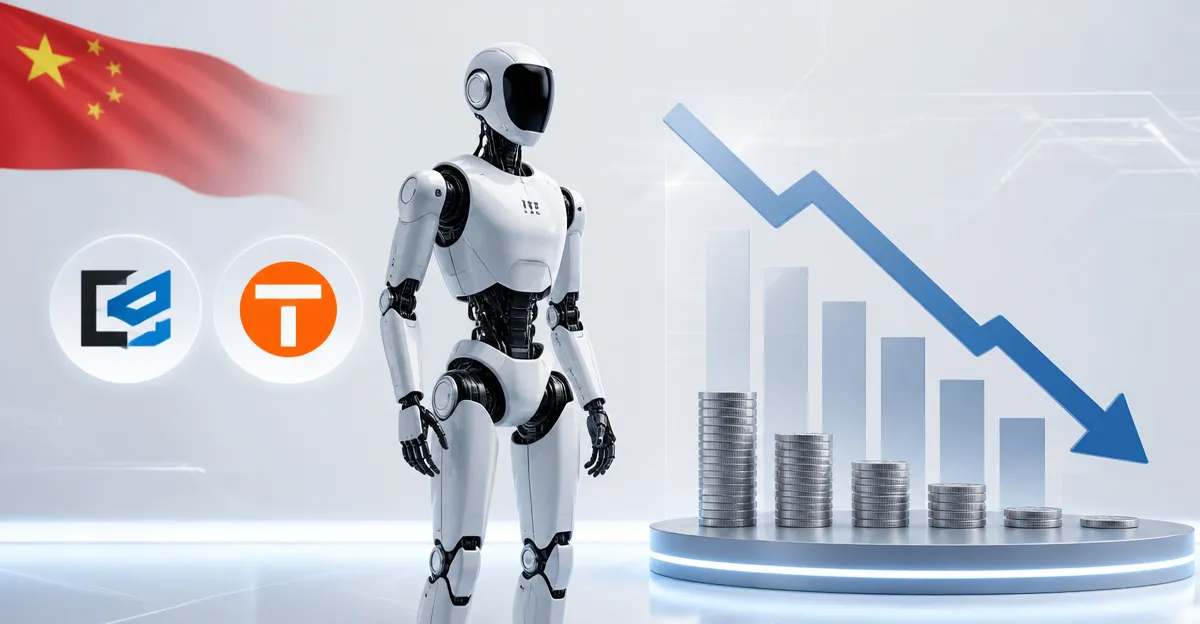
August 24, 2026, (Inside AI) — Shenzhen-based humanoid robot maker ENGINEAI has pushed the unit cost of a general-purpose humanoid robot below RMB100,000 (about $14,000). The company says the machine is built for practical work, not toy shelves.
CEO Zhao Tongyang revealed the pricing threshold during a recent public statement. He said comparable robots cost more than RMB1 million just three years ago. The figure covers robots designed for factory, household and other real-world applications.
The announcement lands at a critical moment for China’s humanoid robotics sector. Local governments have rolled out subsidies and industrial parks to accelerate commercialization. ENGINEAI’s claim signals that price barriers are falling faster than many analysts expected.
The RMB100,000 threshold separates tools from toys
Zhao was explicit about what the sub-RMB100,000 price does not include. Low-cost toy products and stripped-down demo units are excluded from the calculation. The company is referring to machines that can perform practical tasks in factories and homes.
This distinction matters because the humanoid market is crowded with showpieces. Many robots can wave, walk, or dance, but few can reliably grip tools, navigate unstructured spaces, or operate for hours without intervention. ENGINEAI is positioning itself in the functional category.
Three years ago, a general-purpose humanoid with comparable capabilities cost over RMB1 million. The tenfold drop reflects cheaper actuators, better supply chains, and modular design. Chinese manufacturers have aggressively sourced domestic components to avoid import premiums.
ENGINEAI has not disclosed exact production volume or margin details. The company maintains an official website with product specifications but has not released a full bill of materials. Independent verification of the cost claim remains difficult.
China’s humanoid race accelerates as prices collapse
The RMB100,000 milestone could reshape procurement decisions across logistics, manufacturing, and elder care. At that price, a robot that replaces even one shift of manual labor can pay for itself within a year in some regions.
Competing Chinese firms such as Unitree, Agibot, and Fourier Intelligence have also announced aggressive pricing targets. Unitree’s G1 humanoid launched at $16,000 in 2024. Agibot has focused on factory deployments with state-backed clients.
Western competitors remain far more expensive. Tesla has said its Optimus robot could eventually sell for $20,000 to $30,000, but current prototypes cost significantly more. Figure AI and Boston Dynamics have not announced sub-$20,000 general-purpose units.
Read: China Humanoid Makers Face Challenge of Putting Robots to Work
ENGINEAI’s announcement was first reported by Chinese tech outlet IT Home. The company has not yet responded to requests for independent cost breakdowns or third-party audits.
The broader trend points to a commoditization wave. As component prices fall and software stacks mature, humanoid robots may follow the path of drones and electric vehicles, where Chinese manufacturers undercut global rivals through scale and vertical integration.
Read: China’s Humanoid Robot Startups Move From Demos to Real Jobs
Whether ENGINEAI can deliver reliable machines at that price remains the central question. Cost claims are easy; field performance is hard. Early adopters will likely test these robots in controlled factory settings before household deployment becomes common.

Tobias is less interested in what a robot or a prompt can do today than in what it means for tomorrow. He writes about prompt engineering and robotics for readers who want context, not just specs.