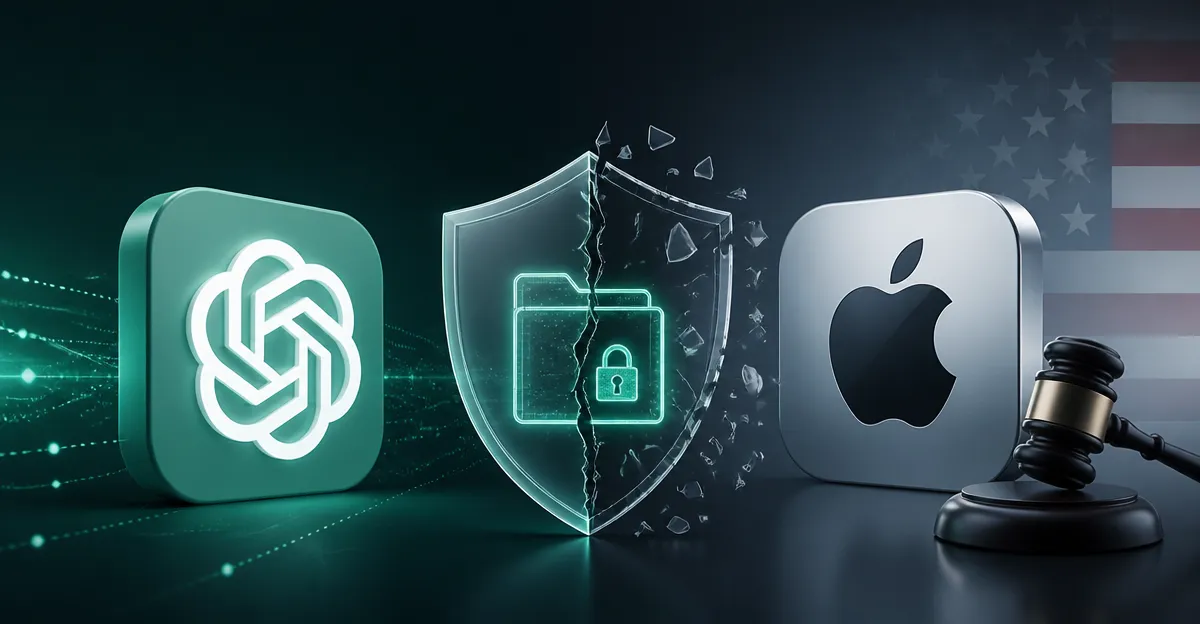
September 1, 2026, (Inside AI) — OpenAI has pushed back against Apple’s trade secret lawsuit, arguing the iPhone maker cannot prove any confidential information was actually stolen by former employees. The dispute centers on hardware design, manufacturing, and supply-chain operations as OpenAI expands into consumer devices.
In a court filing late Monday in San Jose, California, OpenAI said Apple is trying to shift blame for its own internal mess. The AI lab contends Apple is using litigation to slow a potential competitor and discourage staff from leaving.
Apple sued OpenAI and former Apple employees Tang Tan and Chang Liu in July. The lawsuit alleged the two men misappropriated trade secrets after joining OpenAI’s hardware initiative. OpenAI has hired roughly 400 employees from Apple for that effort, according to court filings.
OpenAI argues California law permits employees to move freely between rivals. The company also claims Apple’s own policies created the confusion. Apple encourages workers to use personal iCloud accounts for work documents, making it hard to separate personal and company information when someone leaves, OpenAI said.
Apple’s practice of immediately escorting departing employees from its premises does not give them enough time to return company devices or transfer internal files, OpenAI added. In the filing, Liu said any access to Apple documents after his departure was done to help former colleagues locate files or answer questions. He said Apple employees repeatedly contacted him for assistance after he left.
Tan, who spent 24 years at Apple, said he returned Apple prototypes before departing and only retained non-confidential materials, including an employee departure checklist that was not confidential.
OpenAI’s filing included a sharp statement: “This dispute is a mess of Apple’s own making, and it is trying to blame everyone else.” OpenAI, in the filing.
The legal fight marks a dramatic escalation of tensions between two companies that forged a partnership just two years ago. That deal was meant to boost ChatGPT’s reach and help Apple gain a firmer footing in AI. But the relationship soured as competition intensified.
OpenAI ended its filing with a pointed jab: Employees “can leave a company like Apple that has struggled to adopt AI and move to an exciting startup that builds innovative products.” OpenAI, in the filing. “Apple may not like those choices. But it cannot claim those choices are unlawful, and it cannot use its own sloppy procedures to blame others for its own mess.”
The case is being watched closely by employment lawyers and AI industry observers. Trade secret litigation often hinges on whether a company can show specific, identifiable secrets were taken and improperly used. Apple’s complaint alleges Tan and Liu accessed internal Apple files after they left, but OpenAI says Apple failed to show any confidential information was stolen.
Apple has not publicly responded to OpenAI’s latest filing. The company has previously said it takes intellectual property protection seriously and will defend its innovations. The case is expected to proceed through discovery, where both sides will exchange evidence about hiring practices and data access.
OpenAI’s hardware push includes a rumored AI-powered consumer device that could compete with Apple’s iPhone ecosystem. The company has been aggressively recruiting hardware engineers and designers from Apple and other consumer electronics firms. That hiring spree has raised eyebrows in Silicon Valley, where non-compete agreements are largely unenforceable but trade secret claims remain a legal weapon.
The outcome could influence how aggressively tech giants pursue departing employees in court. A ruling in OpenAI’s favor might embolden more AI startups to hire from Apple and other incumbents. A ruling for Apple could chill that movement and force companies to tighten data access policies.
Legal experts note that California’s strong public policy favoring employee mobility often makes trade secret claims difficult to win. Courts require plaintiffs to show concrete evidence of misappropriation, not just suspicious timing or broad hiring patterns. Apple’s case may hinge on whether it can prove Tan and Liu actually used or disclosed specific trade secrets after leaving.