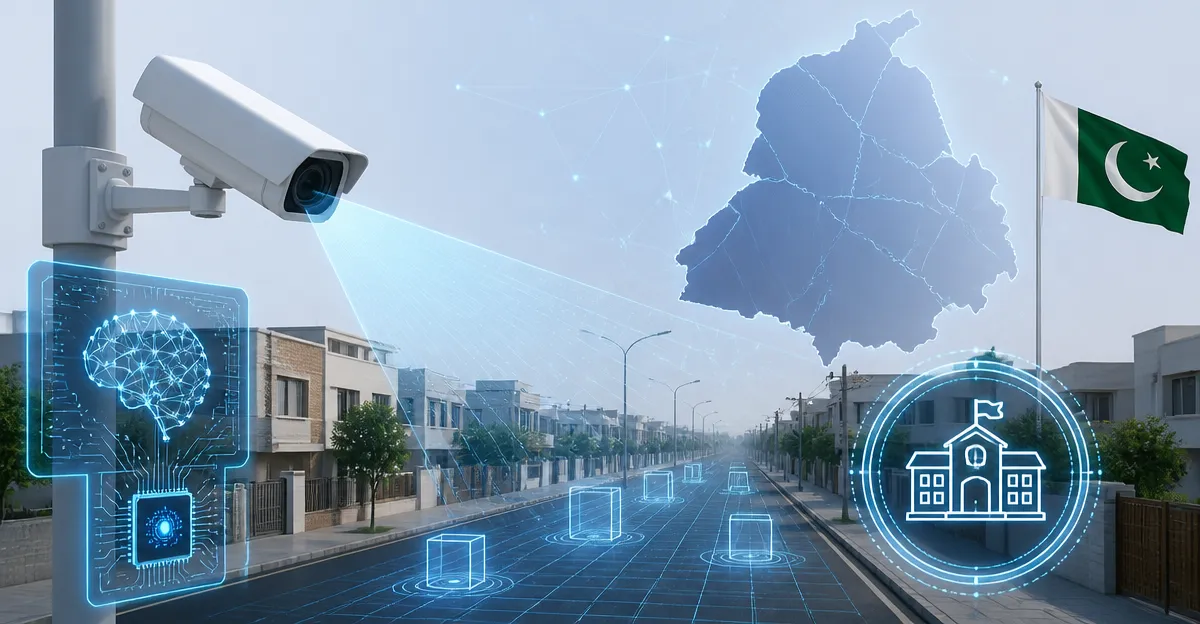
September 6, 2026, (Inside AI) — An AI surveillance network now watches streets across Punjab to find children who should be in school. The Punjab Safe Cities Authority has deployed a system that flags child labour and school absenteeism in real time.
The system taps into existing Safe City cameras and runs continuously. It scans for minors engaged in work during school hours. Between 9:30am and 12:30pm, it also identifies children not wearing school uniforms and uniformed students outside school grounds.
When a match occurs, the software generates an alert. That alert goes to relevant authorities for verification and follow-up. A spokesperson confirmed the rollout and said the goal is to keep children out of labour and boost attendance.
This marks one of the largest public deployments of AI-driven child protection surveillance in South Asia. Punjab is Pakistan's most populous province, home to over 120 million people. The Safe Cities project already operates thousands of cameras in major urban centers.
Automated Alerts Fill a Longstanding Enforcement Gap
Child labour remains persistent in Punjab despite legal bans. Provincial labour departments have limited inspectors. Manual monitoring of streets and markets is sporadic. The new system automates detection and creates a digital trail for each case.
The technology does not rely on facial recognition alone. It combines object detection, uniform classification, and time-based rules. A child in work clothes near a workshop during school hours triggers an alert. A uniformed student outside a school gate does the same.
Privacy advocates have raised concerns about mass surveillance of minors. The PSCA has not published accuracy rates, false positive data, or audit procedures. Without those metrics, the risk of misidentification remains unknown.
Similar systems exist in other countries. China's Xinjiang region uses AI to track school attendance. India's Delhi piloted camera-based child labour detection in 2024. Punjab's rollout appears broader in daily coverage.
Enforcement Depends on Human Follow-Through
Alerts are only as effective as the response they trigger. The PSCA forwards notifications to authorities, but it has not disclosed which agencies receive them. Child protection, labour, and education departments may all be involved.
Past enforcement efforts often stalled at this stage. Officials must visit locations, verify ages, and coordinate with families. That requires staffing and transport, resources that are often scarce.
The spokesperson said the authority will continue introducing modern technology to strengthen child protection. No timeline was given for public reporting on outcomes.
If the system works as intended, it could produce data on child labour hotspots. That would help target inspections and social services. If alerts are ignored, the cameras become another layer of surveillance without tangible benefit.