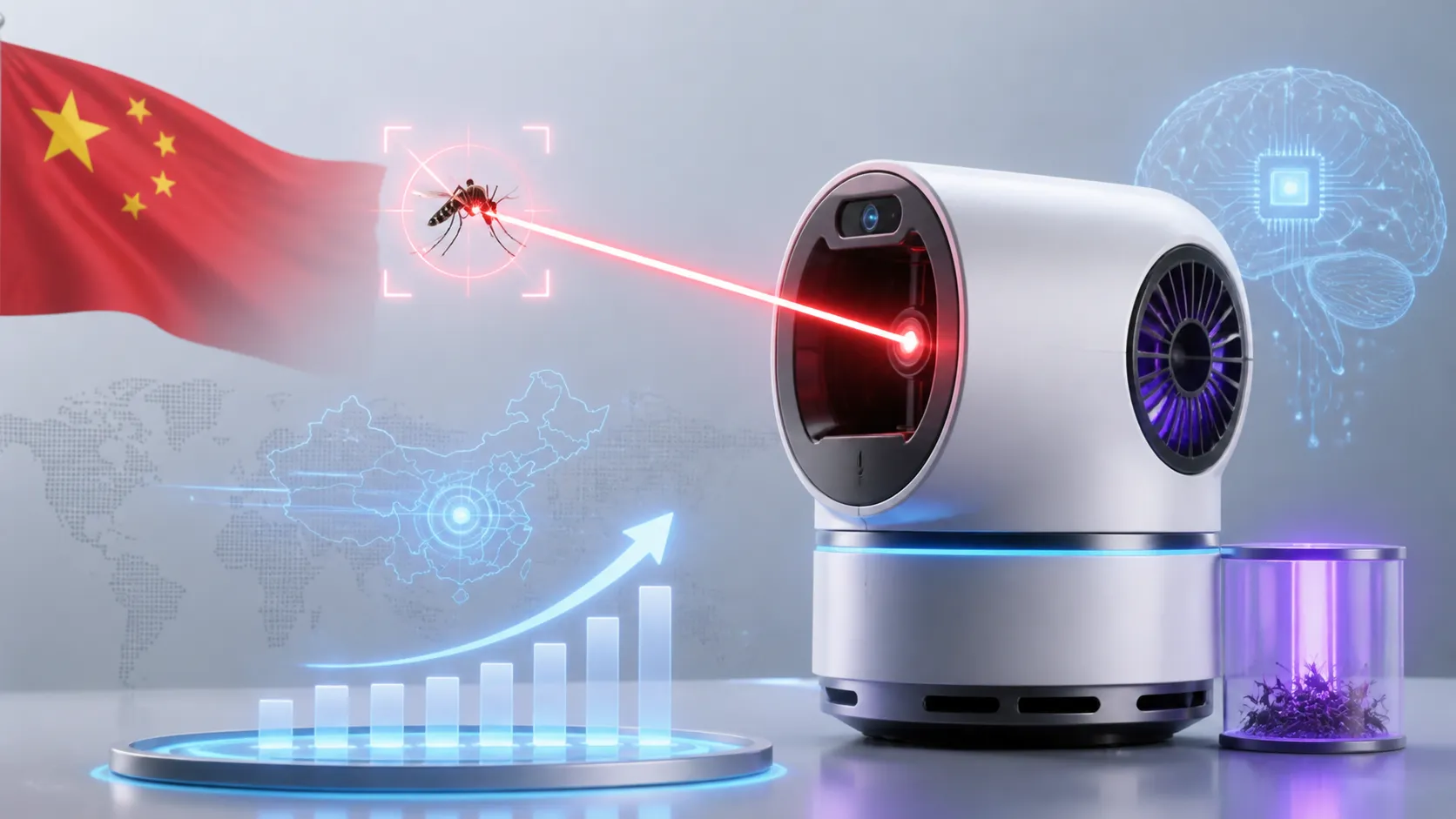
June 27, 2026, (Inside AI) — A Chinese startup has pulled in $2.7 million on Indiegogo for an AI-powered laser mosquito zapper, far surpassing its $20,000 goal. Photon Matrix Lab, based in Changzhou, Jiangsu province, is now wrestling with sensor calibration hurdles and Western safety certifications before mass production can begin.
The portable system uses an AI vision module and lidar to detect and kill mosquitoes mid-flight with industrial-grade lasers. Over 4,000 backers from more than 50 countries each paid about $630 to secure a unit, said sales director Lawrence Leng.
This crowdfunding frenzy highlights both the global demand for high-tech pest control and the gritty reality of hardware development. While the concept is dazzling, the startup’s delayed timeline reveals the gap between viral promises and deliverable products.
Supply Chain Edge Meets Regulatory Hurdles
Photon Matrix credits its rapid prototyping to Changzhou’s dense manufacturing ecosystem. Chief technology officer Li Ran contrasted it with Silicon Valley’s slower pace in an April interview with China Daily.
Read: Can China’s AI Agribots Replicate Its EV Success Story?
“In Silicon Valley, it’s hard to find a supplier who can prototype a high-precision fibre laser module in two weeks,” Li said. “But in Changzhou, the supply chain is right downstairs.”
That local advantage allowed the team to repurpose lidar and edge computing technologies often reserved for military or industrial use into a consumer device. Yet the project’s initial delivery target of early summer has slipped, with no new date set.
Hardware crowdfunding has a checkered history. Many campaigns fail to ship on time, or at all, due to unforeseen engineering snags. Photon Matrix’s challenges are textbook: fine-tuning sensor fusion to reliably track tiny, erratic targets while meeting strict laser safety standards in Western markets.
Laser-based pest control isn’t new. Intellectual Ventures’ Photonic Fence project and other research efforts have explored similar ideas for years. But Photon Matrix is among the first to attempt a consumer-grade device at scale, raising questions about real-world efficacy and eye safety.
Competing viewpoints are emerging. Some entomologists argue that indiscriminate mosquito zapping could harm beneficial insects. Regulatory bodies in the U.S. and EU have yet to issue clear guidance on home laser devices, adding uncertainty to the startup’s timeline.
Read: China’s AI-Powered Robot Exports Could Trigger a New Global Shock
Photon Matrix’s viral moment underscores a broader trend: Chinese hardware startups leveraging local supply chains to innovate faster than Western counterparts. If the team can solve calibration and certification puzzles, it could open a new niche in smart home pest control. For now, backers wait as the startup navigates the long road from crowdfunding sensation to shipping product.