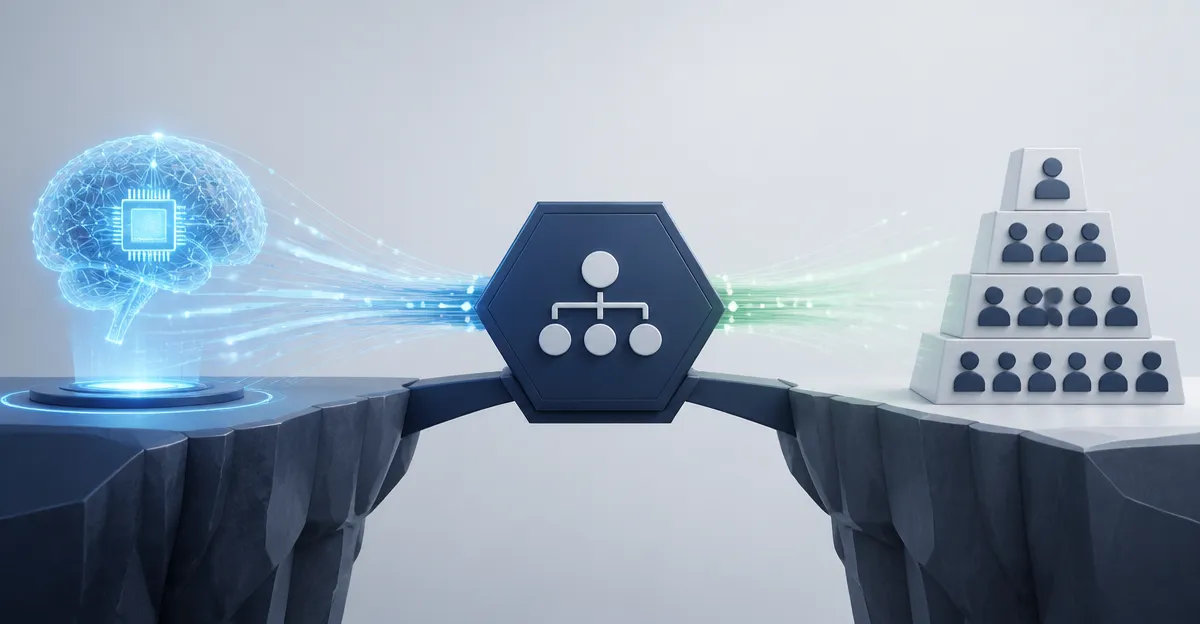
September 1, 2026, (Inside AI) — Generative AI adoption is stalling inside many companies, and the bottleneck is not where most executives look. It sits with middle managers, the people who convert strategy into daily operations.
These managers decide if AI tools become embedded workflows or ignored pilots. Their choices shape whether staff use new systems, resent them, or quietly bypass them. The boardroom approves budgets. The vendor sells the platform. But middle managers control the daily reality.
This gap explains why many AI rollouts fail despite strong executive support. Senior leaders announce a mandate. IT provisions licenses. Training portals go live. Yet weeks later, usage data shows a handful of enthusiasts and a long tail of non-adopters.
Middle managers often lack clear incentives to change. Their performance metrics rarely reward AI experimentation. Many fear that automation will shrink their teams or expose their own inefficiencies. Others simply do not know how to redesign a department around a tool they barely understand.
The result is organizational avoidance. Managers nod in meetings, then protect legacy processes. They assign AI tasks to junior staff as a side project. They wait for proof from other teams before committing. This passive resistance is hard to measure and harder to fix.
Industry data supports this pattern. A 2025 survey by a major consulting firm found that 70% of digital transformations fail to meet their goals. The top cited reason was middle management resistance, not technology limitations. Similar findings appear in academic studies of enterprise software adoption.
Historical context matters here. The same dynamic slowed the rollout of enterprise resource planning systems in the 1990s and customer relationship management platforms in the 2000s. Each wave promised transformation. Each wave hit the same human barrier: the manager who must change how work gets done.
What makes generative AI different is speed. The technology evolves monthly. Best practices are unstable. Middle managers cannot wait for a five-year maturity curve. They must decide now, often with incomplete information and competing priorities.
Some organizations are trying new approaches. Forward-thinking companies now include AI adoption metrics in manager performance reviews. Others create peer networks where managers share practical use cases. A few have appointed “AI champions” at the department level, giving middle managers a direct line to technical support.
But these efforts remain rare. Most firms still treat AI adoption as a training problem. They assume that if managers understand the tool, they will use it. This misses the deeper issue: managers need authority, time, and incentive to redesign workflows, not just a tutorial.
One operations director at a Fortune 500 manufacturer described the challenge this way:
“My team is judged on quarterly output, not on how cleverly we use AI. If I spend two weeks reworking a process and it fails, I own that failure. If I do nothing, I keep my bonus. The math is simple.” — Operations Director, Fortune 500 manufacturer
The quote, shared on condition of anonymity, captures the core tension. Middle managers operate in a system that punishes visible failure and rewards quiet stability. Generative AI demands exactly the opposite: fast experimentation and public learning.
Vendors also play a role. Many AI platforms are sold to executives with promises of radical productivity gains. But the implementation burden falls on managers who were not part of the buying decision. This disconnect breeds cynicism.
Consultants argue for a different sequencing. Instead of top-down mandates, they suggest bottom-up discovery. Let middle managers identify their own pain points. Give them small budgets to test AI on real problems. Celebrate the wins loudly. Then scale what works.
The stakes are rising. Organizations that crack the middle manager problem will compound their AI advantage. Those that do not will keep buying licenses and watching adoption flatline. The technology is ready. The organization is not.
Looking ahead, expect more companies to restructure middle management roles around AI fluency. Job descriptions will change. Compensation will shift. The manager who learns to orchestrate human and machine work will become the most valuable asset in the enterprise.