Explore latest news about algorithms, model architectures, and data-driven techniques that power today's most capable predictive and analytical systems. Covering machine learning and the latest advances in model training and optimization.
A charred scroll from the Vesuvius eruption has been read for the first time using AI, revealing a Stoic treatise. Hundreds more await digital unwrapping, promising a revival of ancient literature.
Wayve is selling automakers on an AI driving system that learns like a human, avoiding costly mapping. With $2.8 billion in funding and deals with Stellantis and Nissan, the startup faces scrutiny over the 'black box' safety of its end-to-end approach.
Meituan has released LongCat-2.0, a 1.6 trillion-parameter AI model trained entirely on Chinese chips, marking a milestone in the nation's push for semiconductor independence. The open-source model rivals DeepSeek's latest but uses home-grown hardware for both training and inference.
Advanced chip packaging has become a strategic choke point for AI, with TSMC controlling 95% of the market. A $1.1 billion U.S. research center meant to ease dependence was killed, leaving the industry scrambling for alternatives.
Shenzhen-based Basic Semiconductor advances toward a Hong Kong IPO to fund silicon carbide expansion, targeting AI data center demand. UBS analysts see oversupply now but a shift to 800V architectures by 2027–2028 absorbing excess inventory.
Maharashtra invests Rs 15 crore in an AI-driven study of prehistoric petroglyphs to decode their origins and push for UNESCO World Heritage status by 2030. IIT Madras will use drones and pattern recognition to analyze carvings older than the Harappan civilization.
Dr. Julie Elie’s 15-year study of zebra finches, powered by machine learning, identified 11 distinct calls and their meanings, earning her the $1,00,000 Coller-Dolittle Prize. The breakthrough highlights AI’s growing role in unraveling animal communication and edges science closer to two-way dialogue with other species.
Anthropic has accused Alibaba of unlawfully extracting capabilities from its Claude AI model, marking the largest known attack on the firm. The allegation, revealed in a letter to Reuters, intensifies U.S.-China AI rivalry and raises urgent questions about model protection.
IBM has revealed a 0.7-nanometer chip technology that stacks transistors in 3D, doubling density and boosting performance for AI. Production could start within five years, intensifying the race with TSMC and Intel.
A new AWS-Vexcel collaboration reveals the optimal mix of embedding models, fusion strategies, and captioning for searching aerial imagery by natural language. The findings challenge one-size-fits-all approaches and highlight feature-dependent performance gaps.
Researchers have trained a neural network to automatically find space hurricanes—massive plasma spirals that threaten satellites and radio. The system scans ultraviolet images in minutes, outperforming manual methods and older algorithms.
Amazon Web Services is in early discussions to sell its Trainium AI chips directly to external customers, potentially creating a $50 billion business and challenging Nvidia's dominance in AI hardware. CEO Andy Jassy hinted at the move in April, citing overwhelming demand.
Amid warnings of super typhoons, Chinese researchers deploy an AI system that excels where conventional models fail—predicting rapid storm intensification. The technology could transform disaster preparedness in Hong Kong.
Amazon SageMaker AI's new observability capability unifies token performance and infrastructure metrics for inference endpoints. It reduces issue diagnosis from hours to minutes with pre-built dashboards and Grafana support.
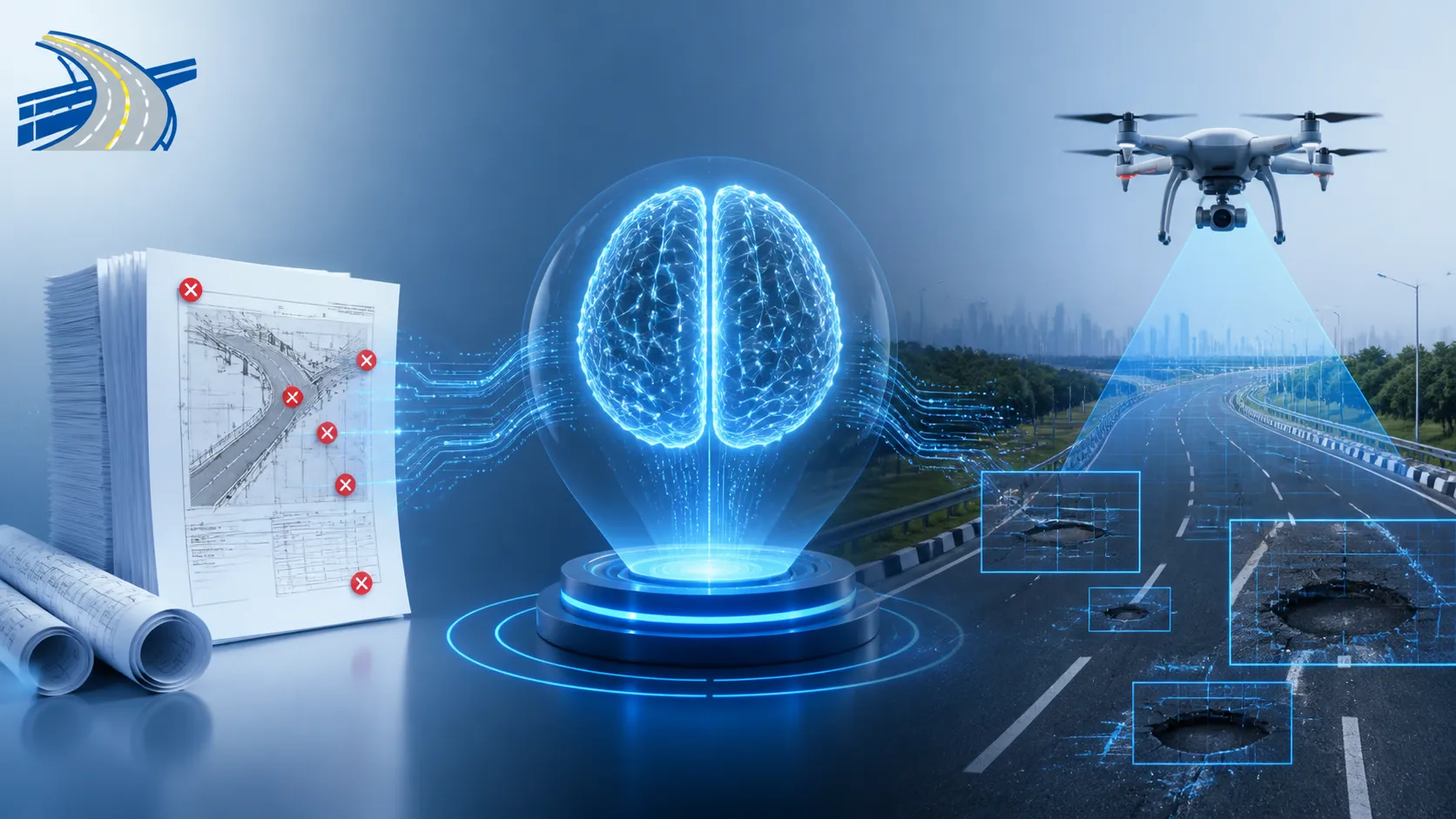
NHAI's new in-house AI scans Detailed Project Reports for costly errors and lets engineers identify road defects by uploading photos. The system, already handling 50,000 queries, stays locked to internal documents to prevent misuse.
A new NEJM AI study details how OpenAI's o3 Deep Research model helped physicians diagnose 18 rare genetic diseases in children, adding a 4.8% yield after years of expert analysis failed. The AI surfaced evidence-linked hypotheses, not diagnoses, showing promise for scalable reanalysis of unsolved cases.
Amazon SageMaker AI's new container caching eliminates image download delays during scale-out, cutting startup latency by 51% for generative AI inference. The feature works automatically on new instances, complementing existing optimizations for rapid, predictable scaling.
Chinese AI labs are experimenting with domestic chips for early training phases, driven by US sanctions. Five models now use local silicon for pre-training or post-training, though none have gone fully native yet. The shift could reshape global AI supply chains.