June 17, 2026, (Inside AI) — Amazon Web Services has introduced a new feature for its Simple Storage Service (S3) called annotations. This lets users attach custom metadata directly to S3 objects at massive scale. The metadata can be in JSON, XML, or YAML format. Each object can hold up to 1GB of annotations.
Why This Matters for AI Agents and Analytics
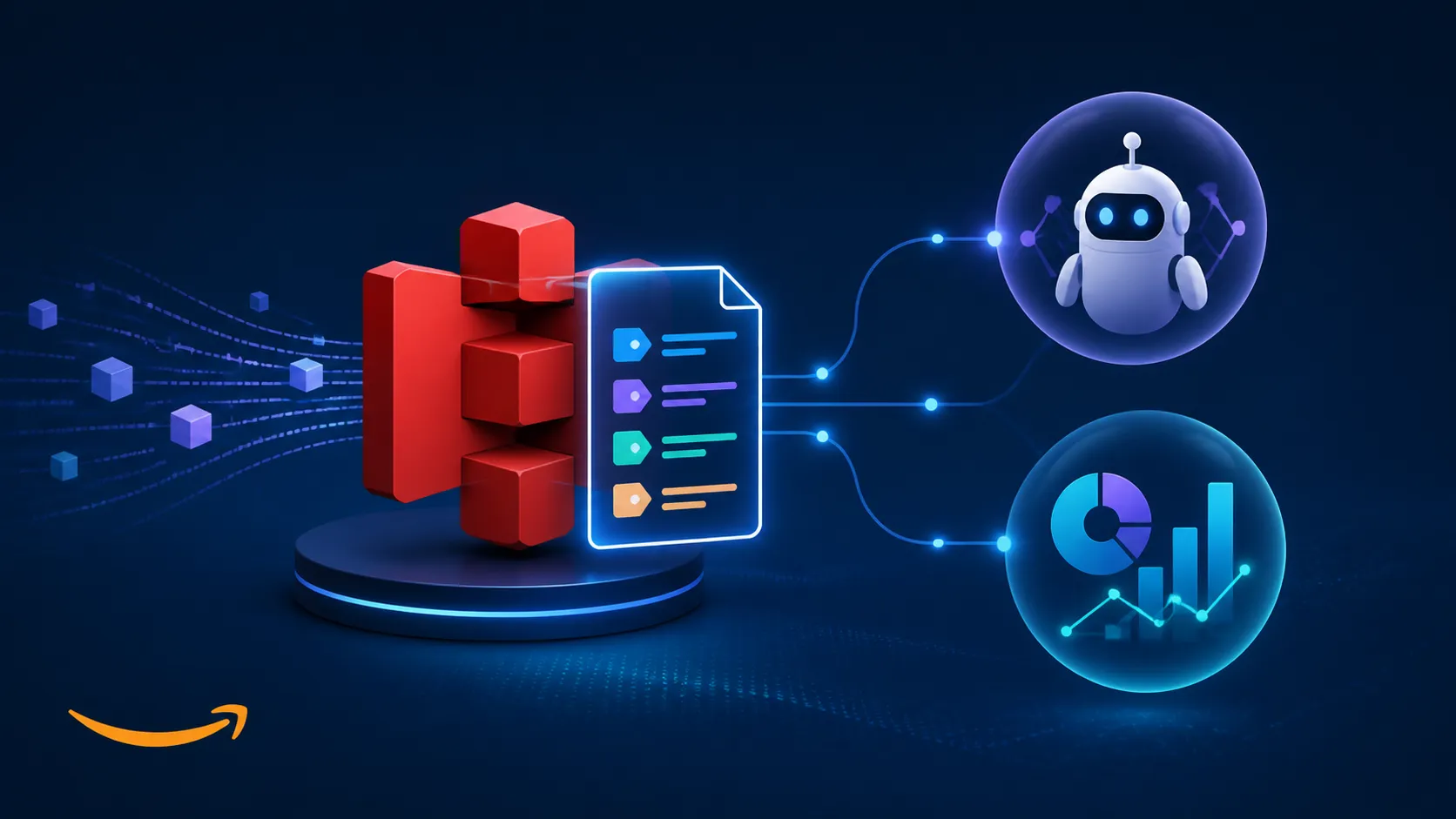
Annotations give AI agents and analytics tools the context they need to find and use the right data. Without them, applications often need separate metadata systems. Now, context stays with the object itself. Annotations can be modified or deleted at any time. This keeps context current as data evolves.
How Annotations Fit Into S3’s Metadata Landscape
S3 already has other metadata types. System-defined metadata captures properties like size and storage class. Object tags help with access control and lifecycle management. User-defined metadata adds small custom information at upload time. Annotations complement these by offering a fundamentally different scale and flexibility.
Durability and Consistency Built In
Annotations share the same durability and consistency properties as the object. They move with the object during copy and replication operations. They are removed when the object is deleted. You can attach and retrieve annotations on any existing or new object.
Read: AWS Launches aws-bench Open-Source Benchmark for AI Agent Evaluation
Querying Annotations at Scale
To query annotations at scale, you can surface them in S3 Metadata. This is the easiest and fastest way to discover and understand your S3 data. S3 Metadata automatically captures object metadata and stores it in read-only, fully managed Apache Iceberg tables. You can query these tables with Amazon Athena and other Iceberg-compatible tools.
Natural Language Search for Data Discovery
You can also use natural language to search objects by their annotations. This works through agents in Amazon SageMaker Unified Studio. It also works with any IDE using the S3 Tables MCP server. This makes data discovery more intuitive.
Read: How Tool Calling Transforms AI Agents from Text Generators to Action Takers
Availability and Getting Started
Annotations are available in all AWS Regions, including the AWS China Regions. Annotation tables are available in all regions where S3 Metadata is available. You can start using the AWS CLI, S3 APIs, or AWS SDKs. For pricing, visit the S3 pricing page. To learn more, read the AWS News Blog, documentation, and S3 Metadata overview page.