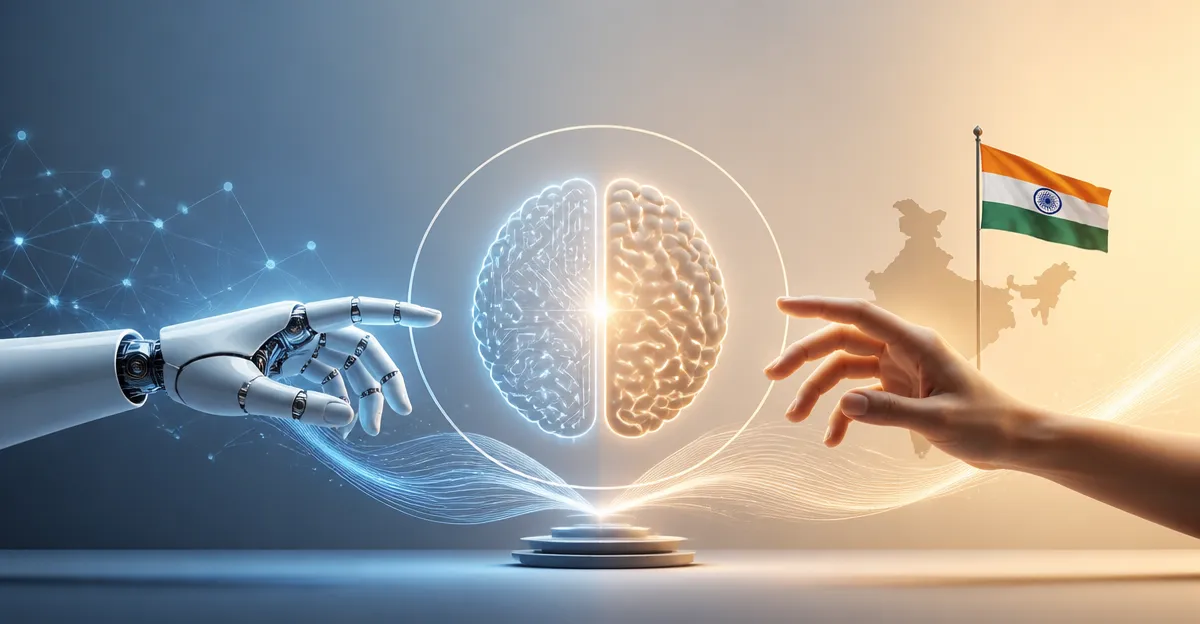
August 5, 2026, (Inside AI) — As artificial intelligence automates routine tasks across industries, a quiet crisis is unfolding: junior employees are losing the very experiences that once built their professional judgment. The mundane work that served as a training ground for critical thinking, communication, and decision-making is vanishing, leaving a gap that traditional on-the-job learning can no longer fill.
This shift demands a fundamental redesign of workplace mentoring, argues a new analysis from Harvard Business Review. The solution lies not in resisting AI, but in making mentorship more intentional, structured, and focused on the skills that machines cannot replicate.
The core problem is clear. When algorithms handle data analysis, scheduling, and report generation, early-career professionals miss the chance to wrestle with ambiguity, learn from mistakes, and develop the nuanced judgment that comes from doing unglamorous work. Recent researches found that employees who relied heavily on AI for routine tasks showed a measurable decline in independent problem-solving abilities over time, even as their productivity increased.
To counter this, organizations must clarify expectations from the start. Mentoring programs should define specific competencies that future leaders need, including critical thinking, communication, prioritization, and navigating ambiguity. Instead of vague career advice, mentors and mentees need a shared roadmap that turns experience into practical learning.
Read: Why Some Junior Employees Thrive with AI While Others Fall Behind
The Harvard Business Review piece emphasizes building a structure that deliberately creates learning opportunities. This means assigning stretch projects that force mentees to make decisions with incomplete information, facilitating structured reflections after key tasks, and pairing junior staff with mentors who model the cognitive processes behind their choices.
One approach gaining traction is “cognitive apprenticeship,” where mentors externalize their thinking, walking mentees through how they weigh evidence, consider alternatives, and anticipate consequences. This method, rooted in educational psychology, is especially critical when AI systems provide answers without showing their work.
Industry leaders are taking note. Deloitte recently overhauled its mentoring framework to include “AI-resistant skill tracks,” while Google has piloted programs where senior engineers use pair programming sessions to teach architectural decision-making, explicitly discussing trade-offs that an AI code generator might miss.
Yet challenges remain. Measuring the impact of mentoring is notoriously difficult, and many organizations struggle to scale personalized guidance. Some experts advocate for AI-powered mentoring platforms that can track developmental progress, but critics warn that algorithmic matching risks reducing a deeply human relationship to a transactional exchange.
The historical parallel is instructive. When calculators became ubiquitous, math education initially focused on rote computation. Over time, curricula shifted to emphasize problem formulation and logical reasoning. Similarly, as AI handles execution, mentoring must pivot from teaching tasks to cultivating wisdom.
Read: Medical Trainees Risk ‘Never-Skilling’ by Relying on AI Before Building Clinical Judgment
Looking ahead, the most successful companies will be those that treat mentoring not as a peripheral HR initiative but as a strategic imperative. In an era where technical skills have shorter half-lives, the ability to think critically, communicate clearly, and navigate complexity becomes the ultimate competitive advantage. The mentors who can impart those skills, and the organizations that support them, will define the next generation of leadership.