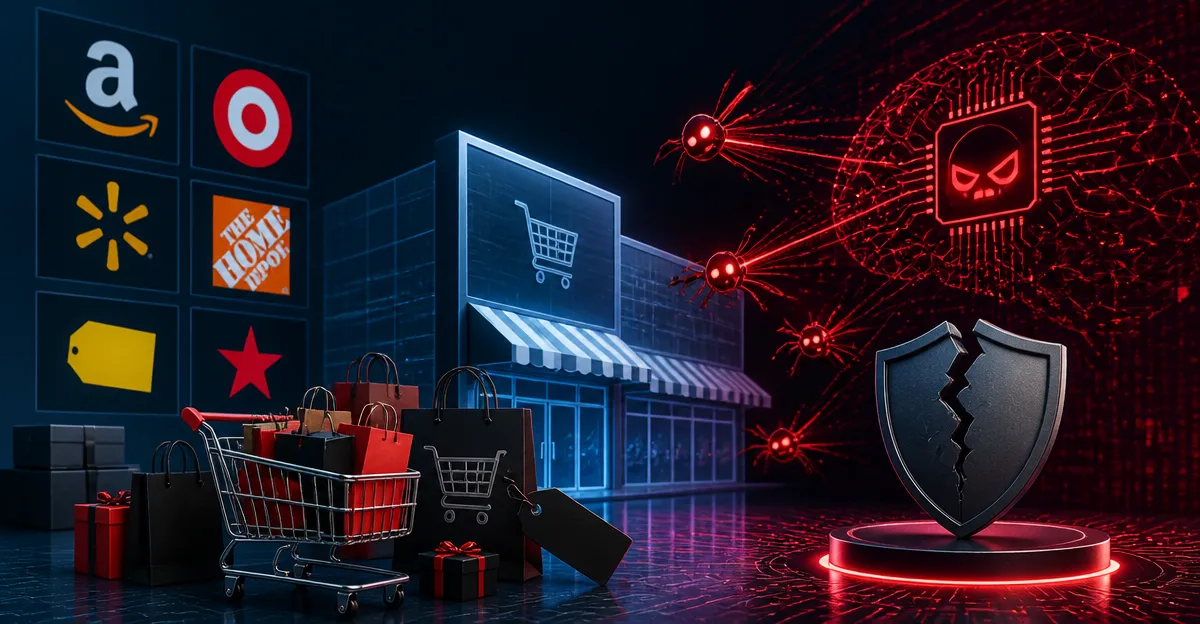
November 25, 2026, (Inside AI) — Retailers entering the Black Friday shopping period face a sharply elevated risk of cyberattacks, with artificial intelligence accelerating both the speed and sophistication of intrusions. At the same time, the sector carries some of the lowest levels of cyber insurance protection among major industries, according to new claims data and industry executives.
Ransomware attacks on retail, leisure, and hospitality businesses are 50% more frequent in November than the monthly average, according to claims data from insurer CFC. Only 43% of small and medium-sized retailers carry cyber insurance, compared with 81% in financial services and 71% in technology.
The timing is consequential. Black Friday and Cyber Monday bookend one of the busiest revenue periods of the year, and retail operations depend heavily on functioning technology. A disruption during peak trading can quickly become a material financial loss, industry executives warn.
"Retailers spend months making sure their websites, stock and logistics can withstand the surge in customers. But Black Friday should be treated as a resilience exercise as much as a revenue opportunity," said Lindsey Maher, CFC's head of global cyber development.
Read: US senators warn White House that AI-enabled cyber threats are outpacing defenses
UK shoppers are expected to spend £235 ($307) each this Black Friday, with total UK spending projected to reach its highest level since 2022, according to research from PwC. That revenue concentration raises the stakes for any operational interruption.
Retailers typically do not purchase additional cyber insurance for a single weekend. Instead, they focus on testing and strengthening resilience, said David Molony, Europe, Middle East and Africa head of cyber and financial sponsors at Aon.
"A cyber incident that interrupts the ability to trade during peak season can move very quickly from an operational issue to a material financial loss," he said.
The historical precedent is costly. Target incurred net cumulative expenses of $202 million after a 2013 breach during the holiday shopping season that compromised at least 40 million credit cards, the company has said.
Complex retail supply chains, copious credit card records, and the busy shopping period mean retailers are primed for maximum chaos and interruption, said Sydonie Williams, head of international cyber risks at Beazley. While AI increases the threat risk, it also improves defence mechanisms, she said.
Francisco Donoso, chief product and technology officer at Beazley Security, said AI was speeding up attacks and the number of vulnerabilities being exposed was almost six times higher than a year ago.
"It's really hard for organisations to keep up," Donoso said.
Read: AI Lowers Barriers for Cybercriminals in South Korea and Japan Attacks
The insurance gap is not merely a retail problem. It reflects a broader pattern in which sectors with high transaction volumes and sensitive customer data lag behind financial services in adopting cyber coverage. Financial firms have faced years of regulatory pressure and supervisory scrutiny that have normalized cyber insurance as a cost of doing business. Retailers, particularly smaller ones, often treat it as optional until an incident forces the calculation.
AI's role in the threat landscape is dual. Attackers use automation to scan for vulnerabilities, craft phishing campaigns, and accelerate exploitation of unpatched systems. Defenders use similar tools for anomaly detection and rapid response. The net effect depends on which side adopts faster and more effectively. Donoso's estimate that vulnerability exposure is nearly six times higher than a year ago suggests the offensive side currently holds an advantage in volume, even if defensive tools are improving.
The Black Friday period concentrates risk because it combines high transaction volumes, temporary staffing, and elevated public attention. Retailers that have not invested in resilience testing may find that insurance, even where present, does not cover reputational damage or lost customer trust. The Target breach remains a reference point because it demonstrated how a single holiday-season incident can produce nine-figure costs and lasting brand damage.
For now, the industry's focus is on preparedness rather than new insurance purchases. That approach places the burden on operational resilience, incident response planning, and technology hardening. Whether that is sufficient against AI-accelerated attacks will be tested in real time over the coming days.

Tobias is less interested in what a robot or a prompt can do today than in what it means for tomorrow. He writes about prompt engineering and robotics for readers who want context, not just specs.